
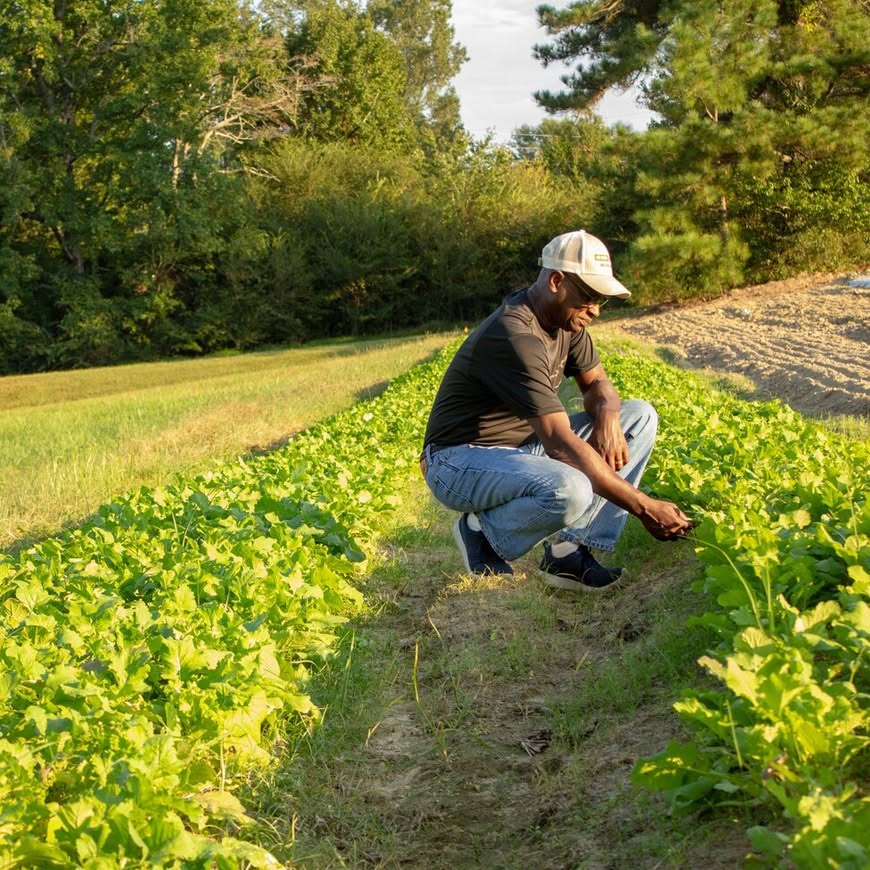
A pastor in Raleigh, North Carolina, offered a blessing as farmers and congregations gathered. “Our lives and the great variety of life depend on the land and its vitality,” Community United Church of Christ (CUCC) pastor Rev. Lacey Brown prayed at one of these gatherings. “We are aware that creation is a gift and we reap what we sow.”
This Blessing of the Land is the heart of something that has been quietly, faithfully growing in Wake County since spring 2021: a community-supported agriculture (CSA) partnership that brings together urban faith communities and Black farmers, anchored by CUCC and organized through the Farm and Faith Partnerships Project of Rural Advancement Foundation International–USA (RAFI-USA).
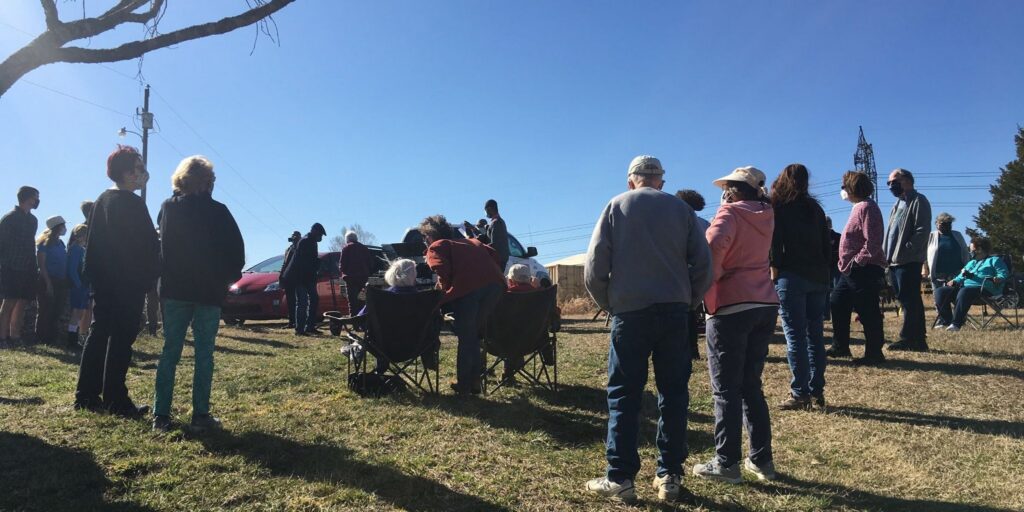
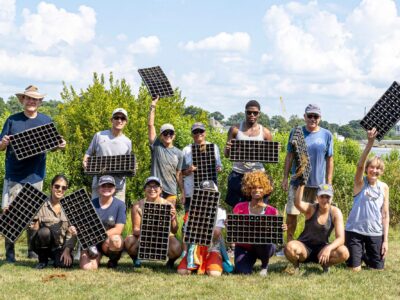
Photo Courtesy Community United Church of Christ
The United Church of Christ holds as a core conviction that God calls believers “to be servants in the service of others and to be good stewards of the earth’s resources,” and its motto says it plainly: “To believe is to care; to care is to do.” At CUCC in Raleigh, that belief found a concrete shape: pre-purchasing shares of a farmer’s harvest before a seed enters the ground, bearing the farmer’s financial risk alongside them, and receiving the fruit of their labor week by week in return.
The partnership began with a conversation. In February 2020, RAFI-USA program coordinator Jarred White was attending a United Church of Christ (UCC) Southern Conference when he met Gary Smith, a member of CUCC. White had been watching a pattern that troubled him: Black farmers in North Carolina were losing land and market access at devastating rates. Between 1910 and 1997, Black farmers in the United States lost more than 90% of the 16 million acres they had owned. “When I started at RAFI in late 2019, I kept encountering this problem of Black land loss,” White explained to The INDY. “The rate at which Black farmers specifically were losing land was immense.”
Smith heard the problem and recognized it as a calling. “Jarred explained to me that farmers of color still endure systemic racism within the food system,” Smith recalled in conversation with the Episcopal Diocese of North Carolina. “Historically, Black farmers have lost farmland through shady deals, had trouble accessing markets, stores and loan programs that allow them to adapt to climate change and farm sustainably. It just seemed so unjust to us.”
The initial conversation sparked the idea for a CSA partnership with Black farmers. Over the months that followed, White mapped out the Farm and Faith Partnerships Project: a group of churches would purchase CSA shares directly from local Black farmers, providing upfront working capital before the planting season began. Smith began calling congregations across Wake County. “Every congregation I contacted immediately saw the possible impact of the program and was excited by it,” he said. “Usually something new takes a lot of convincing. It just was not the case this time.”
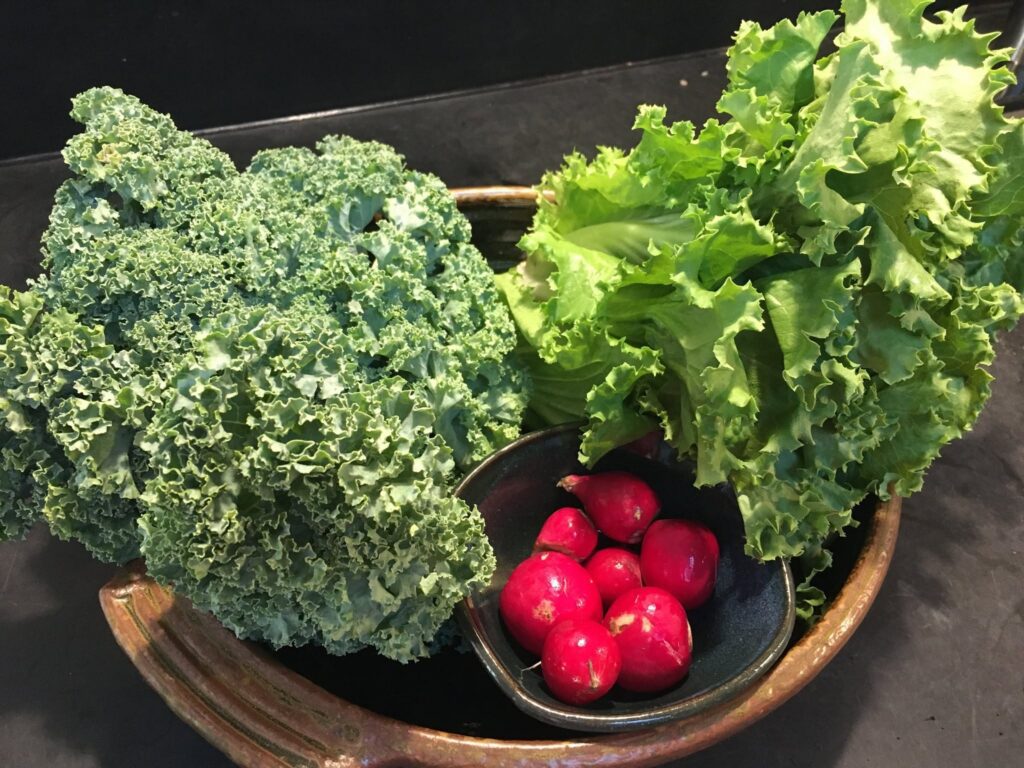
Photo Courtesy Community United Church of Christ
When the CSA launched in spring 2021, eight congregations had signed on alongside three farms for the 80-share program. The pilot generated approximately $20,000 in produce sales for local farmers, and it was only the beginning. By the following spring, it had grown to 11 congregations, eight farms, and over 130 shares of produce. By 2024, it reached up to 20 churches and 15 farmers across nine farms.
Among the farmers who answered the call were Ken and Dennis Daniel, brothers and third-generation stewards of their family’s land in southern Granville County. Singing Stream Farm sits on the fields where Ken and Dennis grew up priming tobacco. After careers away from the farm, they returned to revive the land after decades of dormancy, graduating from the North Carolina State Farm School in 2018 before committing to farming full-time.
At the Blessing of the Land, standing on the soil his grandparents worked, he reflected on what it meant. “I primed tobacco in this field behind me,” Ken reminisced. “I picked cucumbers in this field behind you. This is so special.” The brothers wanted to honor that inheritance: “We wanted to make sure that we did the right thing with the land that our grandparents worked hard to get. I think my grandparents would be very proud to know that we’re actually using that same land to grow and produce food and to do it in a way that is beneficial to the people we serve.”
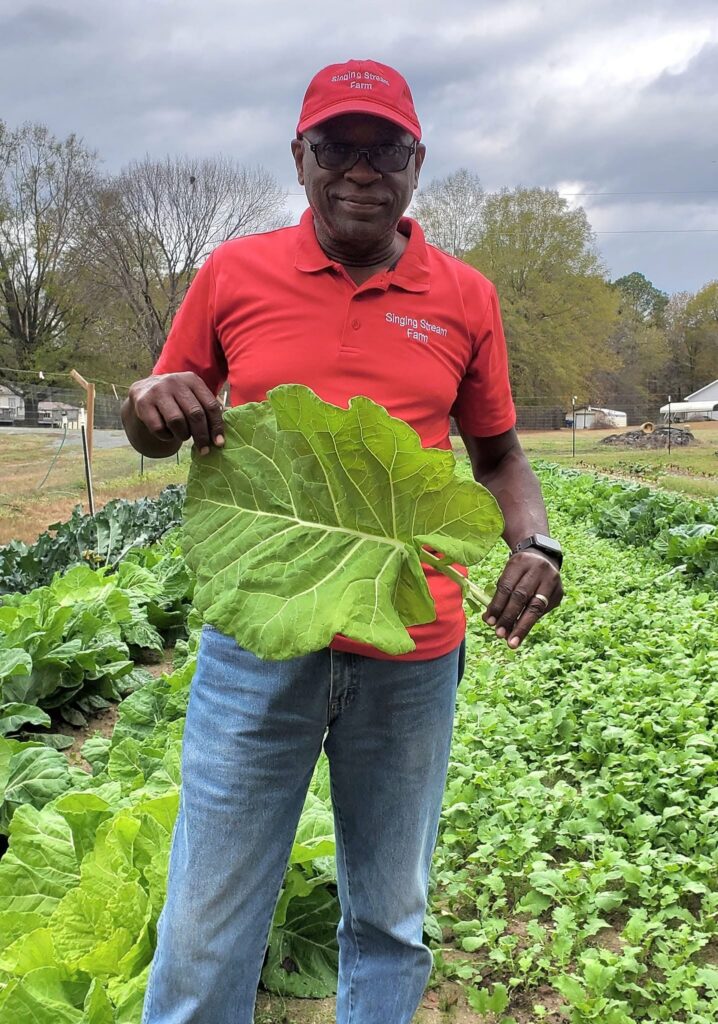
Photo Courtesy Singing Stream Farm
Also in the partnership are Steve and Elke McCalla of Rocky Ridge Farm in Louisburg, a 30-acre organic operation growing vegetables, fruits, and nuts. Steve left a career as a telecommunications network analyst in Queens, New York, to buy land and begin farming in North Carolina. When CSA demand arrived, it transformed their operation. “Because of the CSA,” Steve noted, “we basically transitioned a small farm to a medium-sized farm.” For Elke, the partnership meant something deeper than efficiency: “To even get to the point on our own where we’d be able to have a 30-person CSA would’ve taken us years to get to that level. When the help came from Jarred and [RAFI], they pretty much gift-wrapped this up and put this in our lap overnight,” she said. It offers the couple a stable and reliable source of income and makes it easier to plan and harvest.
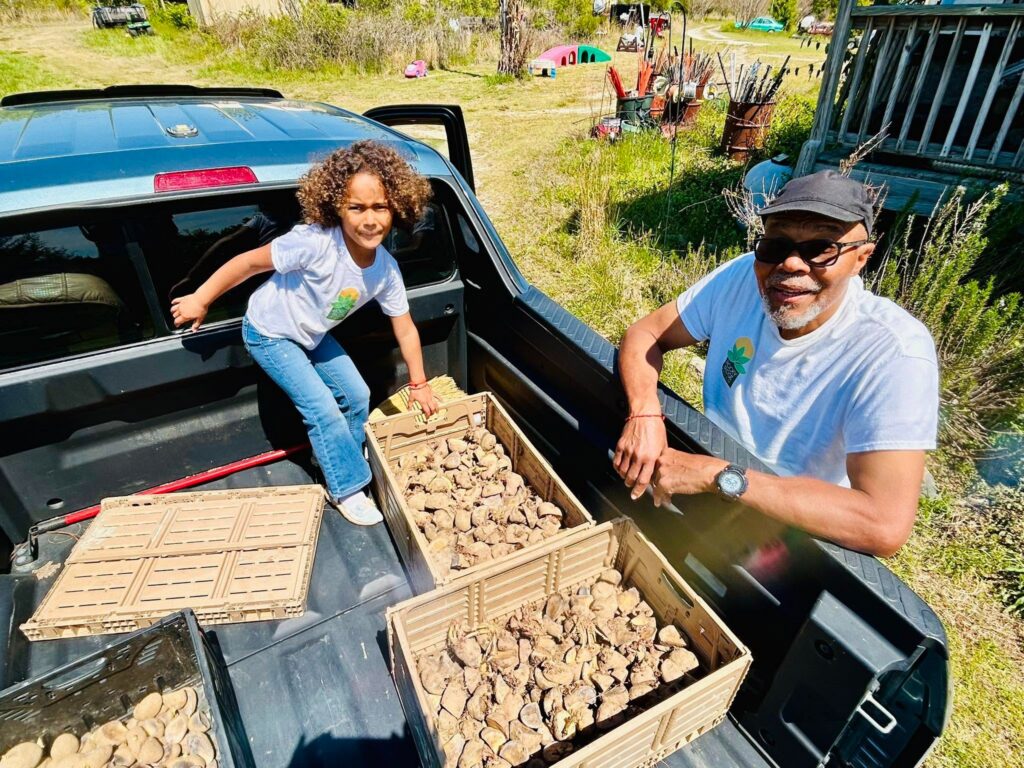
Photo Courtesy Rocky Ridge Farm
The CSA runs in three six- to twelve-week seasons: spring, summer, and fall/winter. Each season delivers a weekly share designed to provide a family of four roughly five servings of fresh produce per person per week at a cost of $20 to $40. Members of each church pick up their shares at their congregation, and uncollected boxes go directly to food banks. White, a CSA member himself, estimates, “If I’m comparing the cost to what I pay at a grocery store, the CSA has been 10-20% less expensive. It’s freshly grown food, and it’s great knowing I have an immediate connection to the person growing that food. It’s really a pretty good deal.” By April 2023, the Wake County CSA had grossed over $150,000 for participating farmers since its launch.
The numbers matter, but they do not tell the whole story. More than that, it had generated something harder to measure: genuine friendships. Farmers and church liaisons gather on a weekly Zoom call to discuss crops, talk through challenges, and share the ordinary family news that friends exchange. One of the farming couples welcomed a child at the start of the project. “She came to her first Zoom meeting the day she was born!” Gary Smith recalled. “We’ve watched her grow over these two years.” One shareholder, Donna Doran, named what the CSA had built more simply than any metric could: “I think the CSA has brought something to many that is much bigger than the numbers,” she said. “Human connection.”
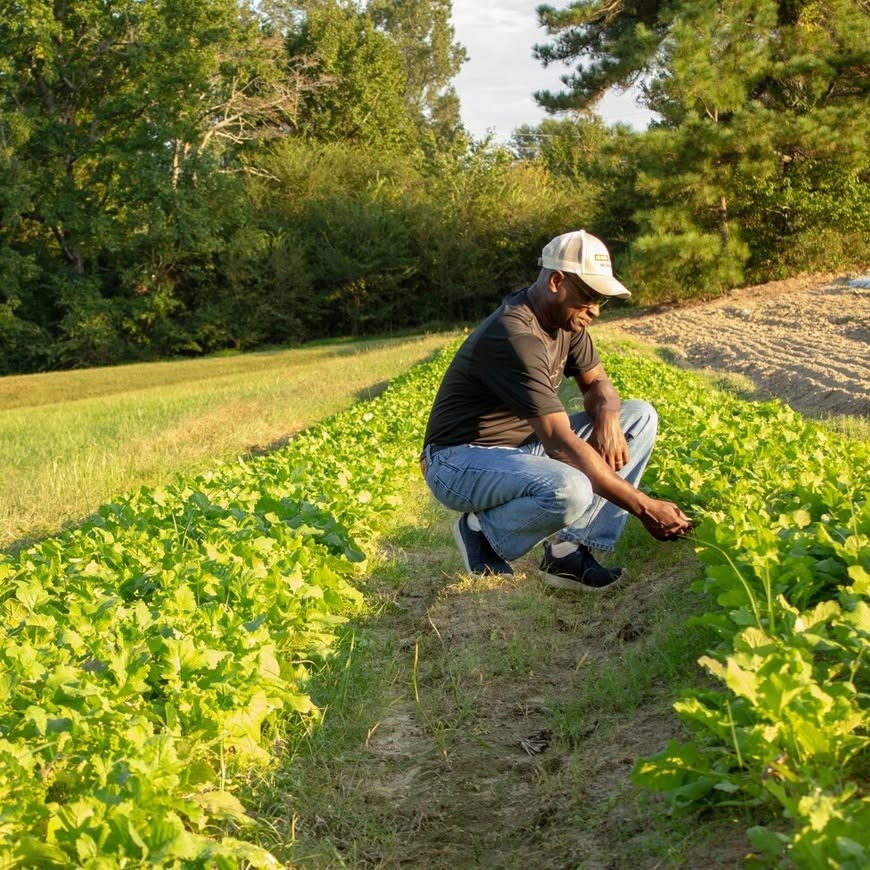
Photo Courtesy Community United Church of Christ
Carl Sigel, a member of Nativity Episcopal Church in Raleigh and one of the project’s early participants, traced what had made all of this possible back to a conviction he recognized from his faith. “It just goes back to the faith aspect,” he said. “We have to care for one another. We have a moral imperative. Food and agriculture, climate and biodiversity loss. Loving our neighbor. All of these things are connected. This is one of the best ways we can do it.”
RAFI-USA is now replicating the model beyond Wake County into Durham County and other parts of North Carolina. For any congregation wondering how the charge to work and tend what God has given connects to the faces of the farmers who grow their food, Wake County offers one very practical, very faithful answer: start with a share.
 Copyright
2026
Root and Vine
Copyright
2026
Root and Vine