
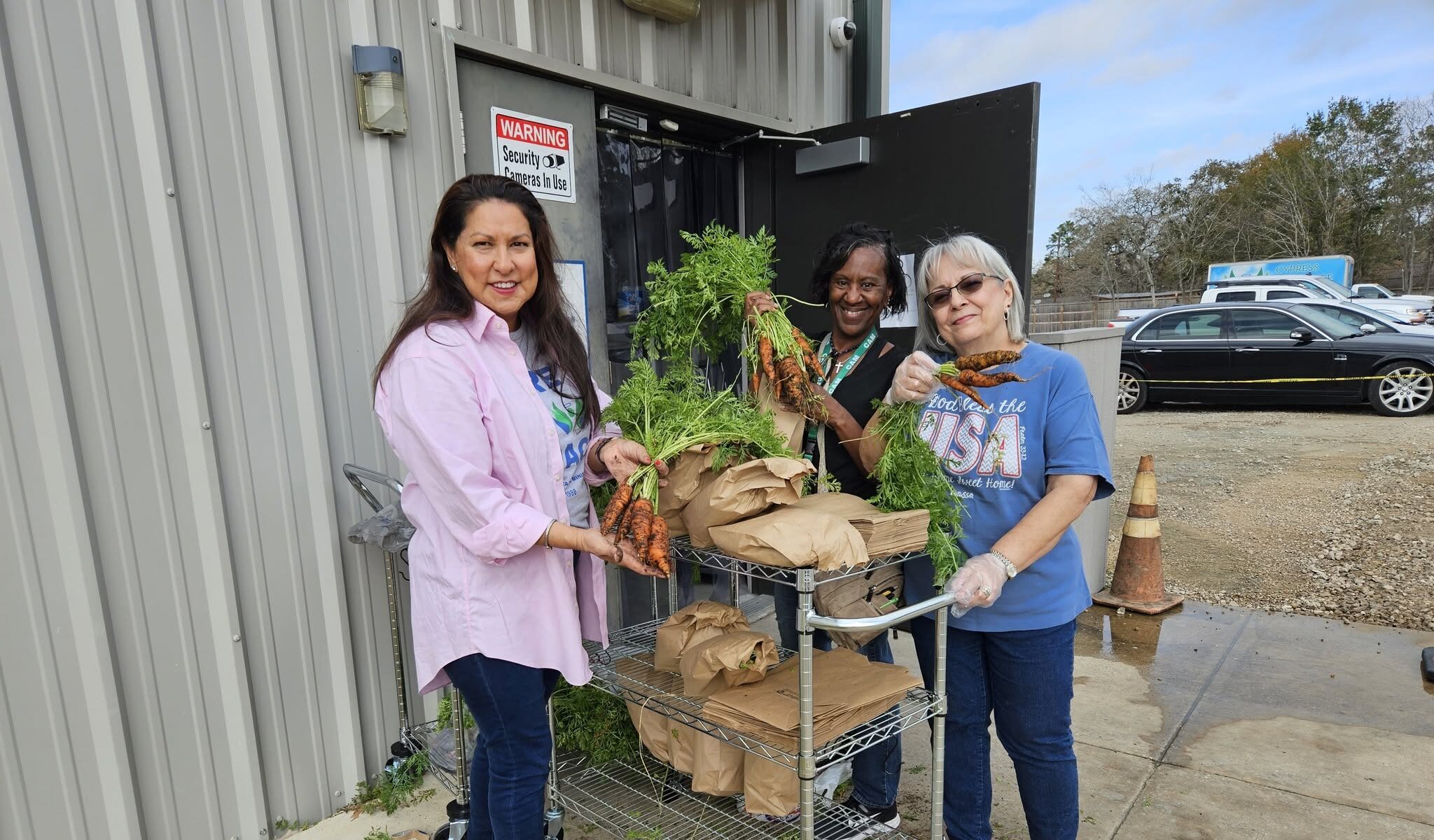
“When you reap the harvest of your land, do not reap to the very edges of your field or gather the gleanings of your harvest. Do not go over your vineyard a second time or pick up the grapes that have fallen. Leave them for the poor and the foreigner. I am the Lord your God.” Leviticus 19:9-10 (NIV)
Long before a single seed went into the ground in Cypress, Texas, that command shaped what a harvest could be. This spring, a garden built by one congregation and handed to another put that command into practice, row by row.
Henry Lombraña directs the Food Pantry at Cypress Assistance Ministries (CAM), a nonprofit that traces its roots to 1990, when parishioners of Christ the Redeemer Catholic Church began serving meals from the backseat of a car to neighbors in crisis. “Volunteers served simple macaroni and cheese meals to hungry neighbors who didn’t know where their next meal would come from,” the organization wrote. That grassroots effort grew into a year-round ministry that, in 2024 alone, served 36,105 individuals and distributed 1,207,925 pounds of food, valued at more than $2.3 million.
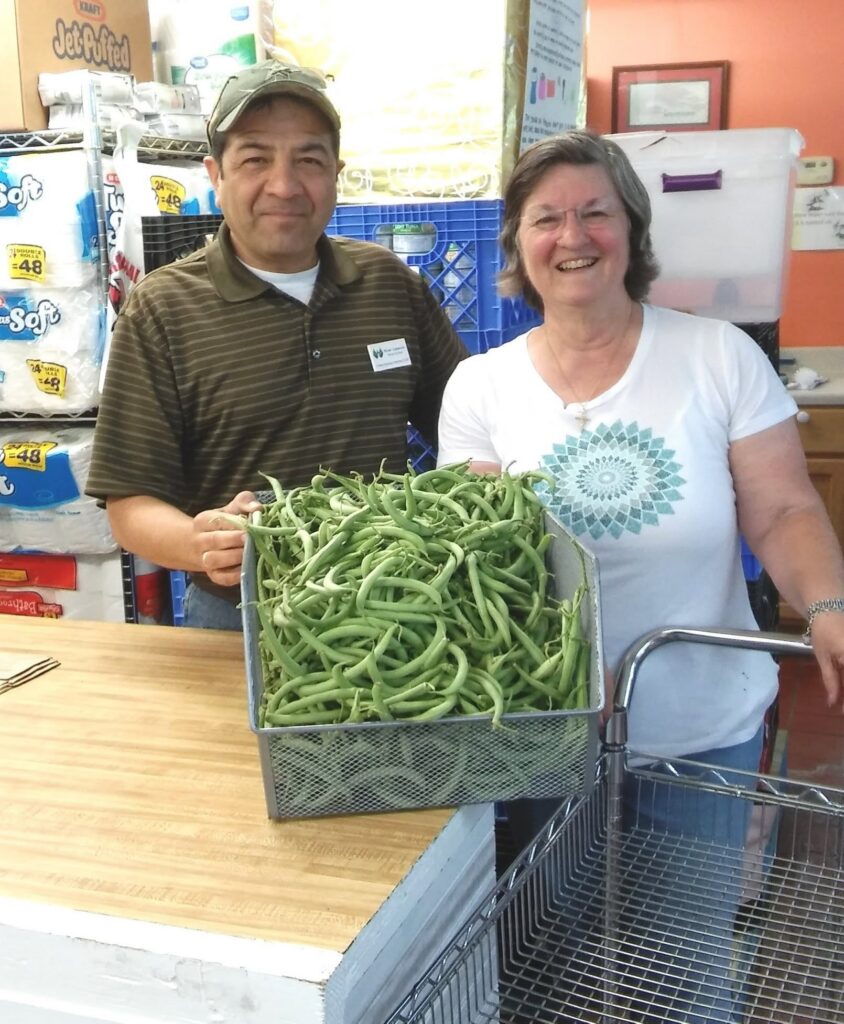
Photo Courtesy Cypress Assistance Ministries
Lombraña held onto a hope of his own: a garden that could put fresh food, not just shelf-stable goods, into the hands of families who needed it. His facility did not have the space. His hope waited seven years for an answer. It came from Messiah Lutheran Church, an Evangelical Lutheran Church in America (ELCA) congregation that had already built a thriving garden of its own. Ron Richter, a Messiah member who took master gardening classes after retiring in 2010, started that garden. “The whole idea behind this is to build the gardening community in Cypress,” he told the Houston Chronicle. It featured 12 raised beds, compost bins, an irrigation system, a greenhouse, a habitat garden of native Texas plants, and beehives kept for pollination. It even took in wood chips from a local tree removal company that otherwise would have paid to dispose of them.
Rather than maintain it alone, the congregation offered the entire garden to CAM. “They reached out to me right before the holidays and said, ‘Would you like to take over our garden?'” Lombraña told My Neighborhood News. “I said, ‘Are you joking?’ It was an easy answer.” Messiah had also donated 580 pounds of produce to CAM in the garden’s early years, then more than 3,000 pounds in 2025. Serving, the congregation says on its garden page, “is an integral part of our faith.”
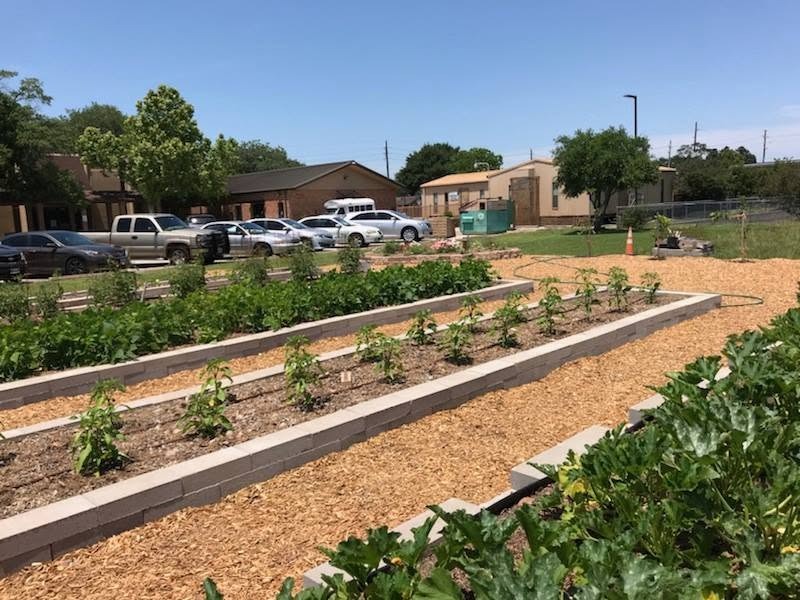
Photo Courtesy Cypress Assistance Ministries
Volunteers began planting in March 2025, and by early May, the first harvest of bush beans, cucumbers and a single pepper had come in. For Lombraña, watching the process, from planting to plate carried its own weight. “Being able to go out there at the beginning and help plant the tomatoes, the cucumbers, the eggplants, to see them coming out, and then to harvest those and share them with our clients, that means a lot,” he added. “We did this for them.”
The beans and cucumbers land in a pantry that reaches neighbors in several different ways. Most arrive through CAM’s Client Choice Food Pantry, where a volunteer walks alongside each neighbor one-on-one as they select their own produce, dairy, meat, and household goods rather than receiving a pre-packed bag. For those who cannot make the trip, the Senior and Homebound Program carries groceries to the door once a month, on the third Monday. CAM also distributes the Commodity Supplemental Food Program Senior Box to older neighbors in partnership with the U.S. Department of Agriculture and the Texas Department of Agriculture, and serves as a Fresh Market site for the Houston Food Bank’s Food for Change program. The organization has also hosted Food Fairs featuring free fresh-produce distribution.
Fresh food from the garden moves into all of it.
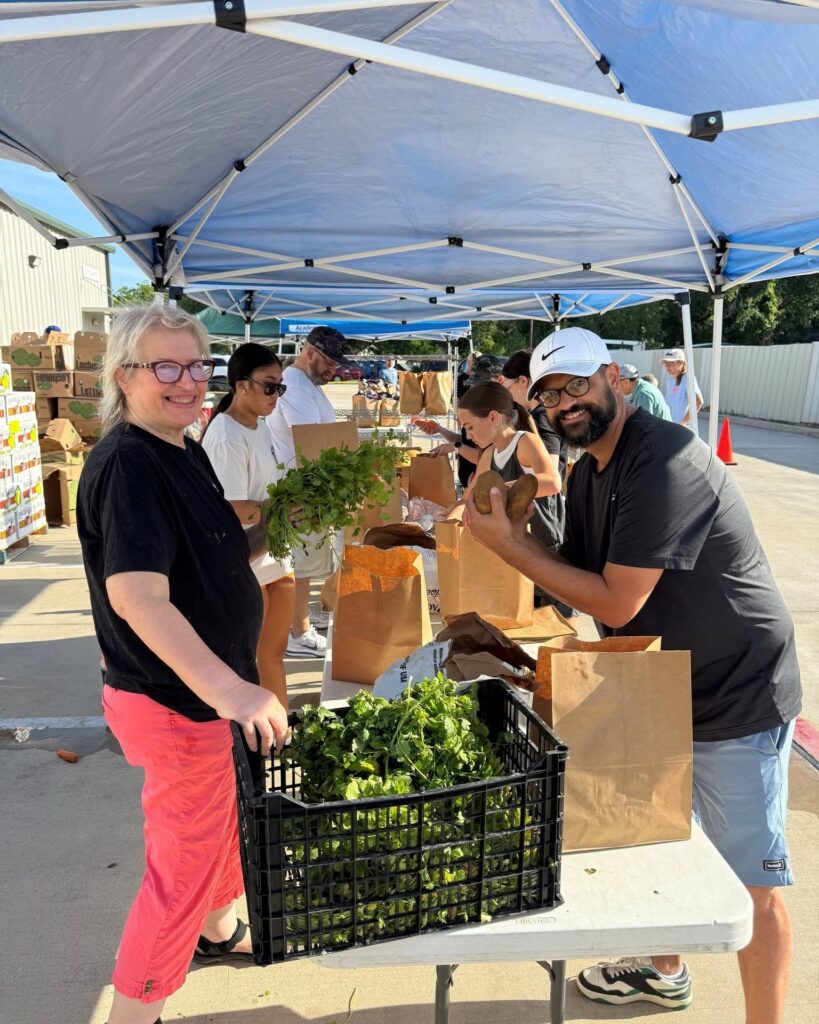
Photo Courtesy Cypress Assistance Ministries
The garden’s harvest tells a story about more than one congregation’s generosity. CAM’s roots run through a Catholic parish; the garden itself came from a Lutheran one; and volunteers from the Church of Jesus Christ of Latter-day Saints and Second Baptist Church now serve alongside them. The ministry convenes a Council of Congregations that draws churches of every denomination into shared work, pooling resources and relationships so that help reaches neighbors without duplication.
The garden is part of a wider circle of Cypress-area ministries that trade surplus back and forth: the St. John Lutheran Church Community Garden, the Cy-Fair Helping Hands Garden, The Living Legacy Center‘s Oasis Garden, and the Reach Unlimited Greenhouse all send what they cannot use to CAM, and CAM does the same in return. “St. John Lutheran, almost all their harvest comes to us,” Lombraña explained. “Nothing goes to waste – what we can’t use, we share with veterans’ groups and other local nonprofits.” That instinct has a Catholic voice behind it, too. In Laudato Si’, Pope Francis wrote that discarded food is “as if it were stolen from the table of the poor.”
That instinct, to leave nothing behind for lack of a place to send it, echoes the same harvest law that opens this story: gather in, but leave something for the neighbor who has less. Lombraña does not describe it in t exactly those terms, but he does describe it as prayer. “My dad taught us, if you want something, pray for it,” he reflected. “After we planted, I went around the community garden and started praying. I give God credit for everything.”
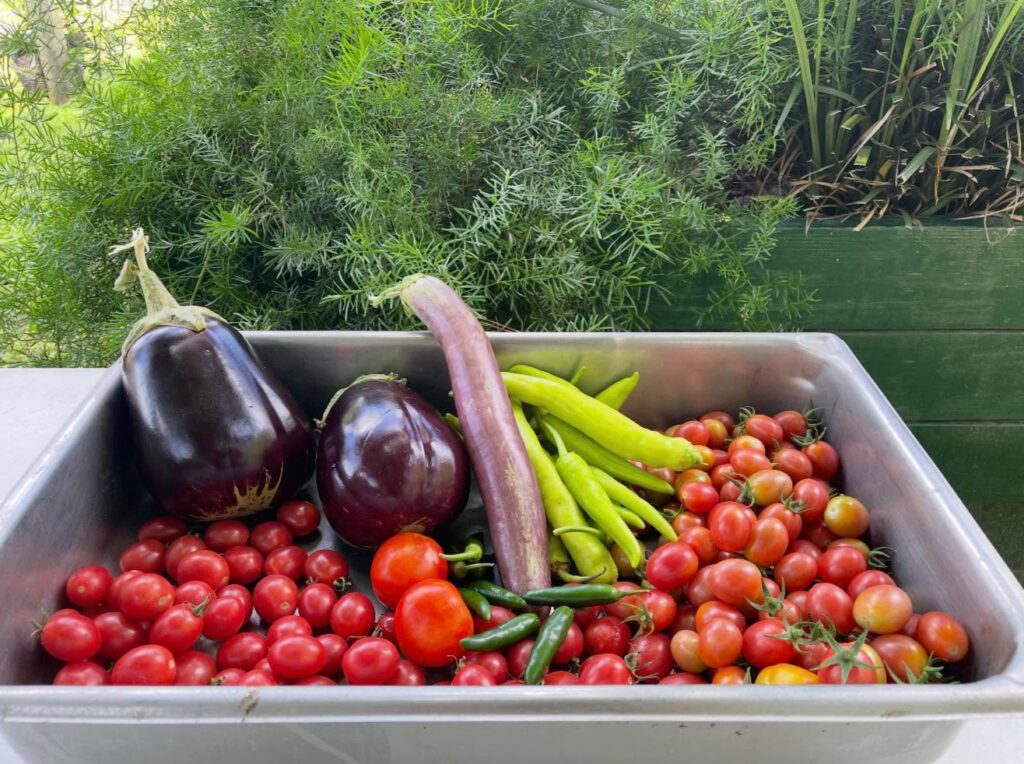
Photo Courtesy The Living Legacy Center
CAM does not intend the garden to stay a one-way gift. Lombraña and CAM plan to expand training and education alongside the harvest, partnering with Urban Harvest and local Master Gardeners, with an eye toward teaching sustainable growing and nutrition skills and educating future growers. “We want to use the community garden as a training tool for our clients,” Lombraña noted. “Eventually we’ll offer training, maybe even small plot rentals to teach people how to grow and care for their own gardens. It’s a great opportunity for our clients and the community.”
Volunteers can join CAM in the garden on Thursdays and Saturdays to help plant, weed, harvest, and prepare produce; no experience required. For Lombraña, the invitation is simple. “To share what our mission and our goals are, that’s how people can support us,” he said. “We’re growing this for the community. We just want to share.” As CAM describes itself, it is “a cornerstone of hope.”
 Copyright
2026
Root and Vine
Copyright
2026
Root and Vine