
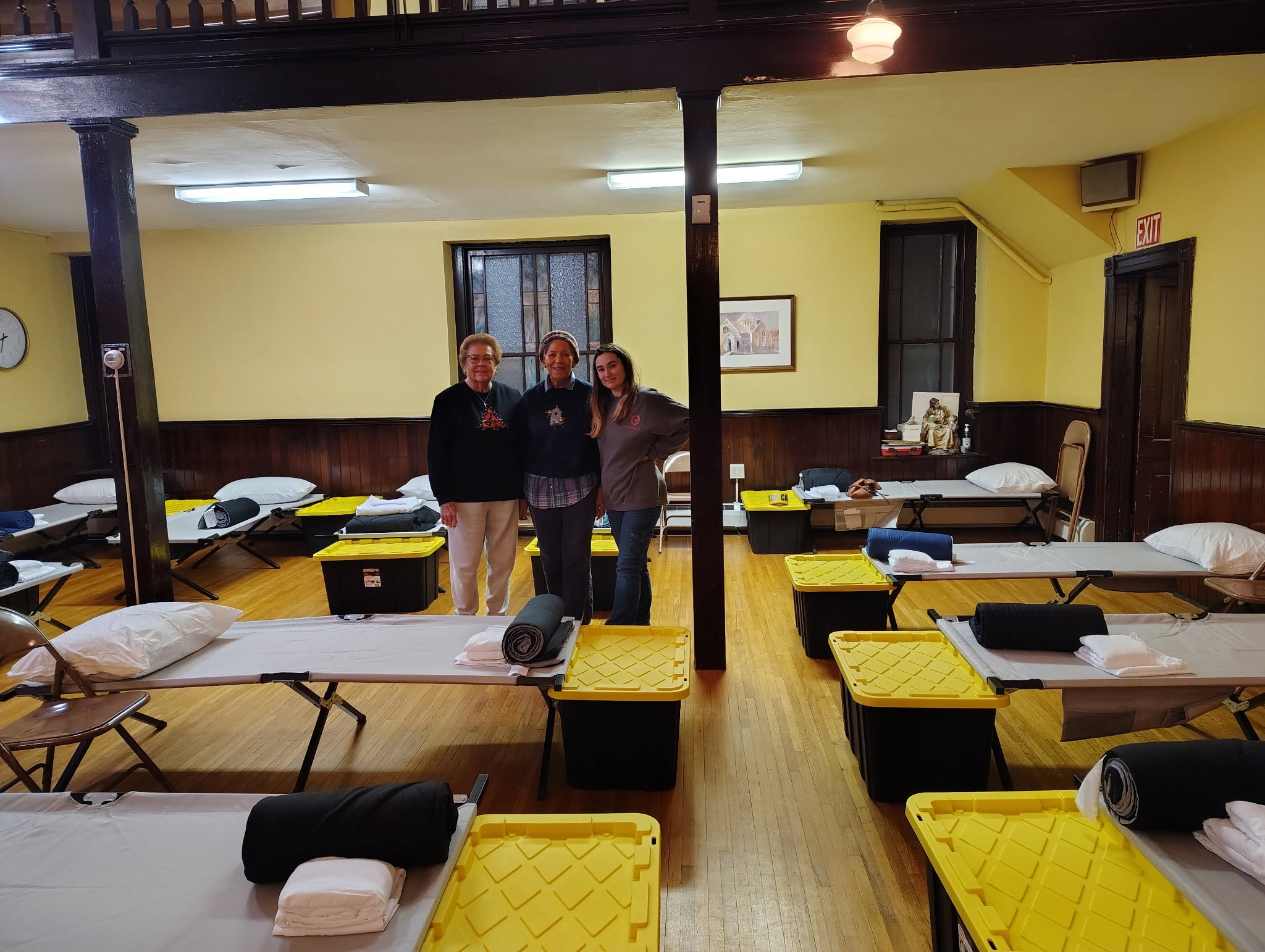
On a 17-degree day during her first winter at St. John’s Lutheran Church in Martinsburg, West Virginia, the Rev. Sherry Miller began looking for a way to give her congregation’s homeless neighbors a place to sleep. Three years later, on Saturday, Jan. 3, 2026, she helped launch the city’s first cold-weather shelter at St. John’s, where about 45 people gathered for the opening ceremony. “This is holy ground,” Miller said. “No one should face the cold alone.” Martinsburg Mayor Kevin Knowles cut the ribbon and, speaking about the city’s unhoused residents, said, “Everyone should be treated with dignity and respect. It doesn’t matter if you’re a CEO or have power.”
St. John’s, which traces its history in downtown Martinsburg back 250 years, describes its calling plainly: “We find Jesus in the face of our neighbors and we work to spread his message of love through intentional actions and preaching of the gospel.”
Caroline Wilson of WVU Medicine’s Berkeley County Community Outreach for Resources and Education (C.O.R.E.) Team told West Virginia Watch that the community had identified the need for a winter shelter three years earlier. The project began taking shape about six months before opening, when Wilson, Miller and the Martinsburg Initiative’s executive director came together as what Wilson called “the right team.” Miller then rallied support from the churches. “It really has just been amazing how this team of three have been able to get this off and running,” Miller said.
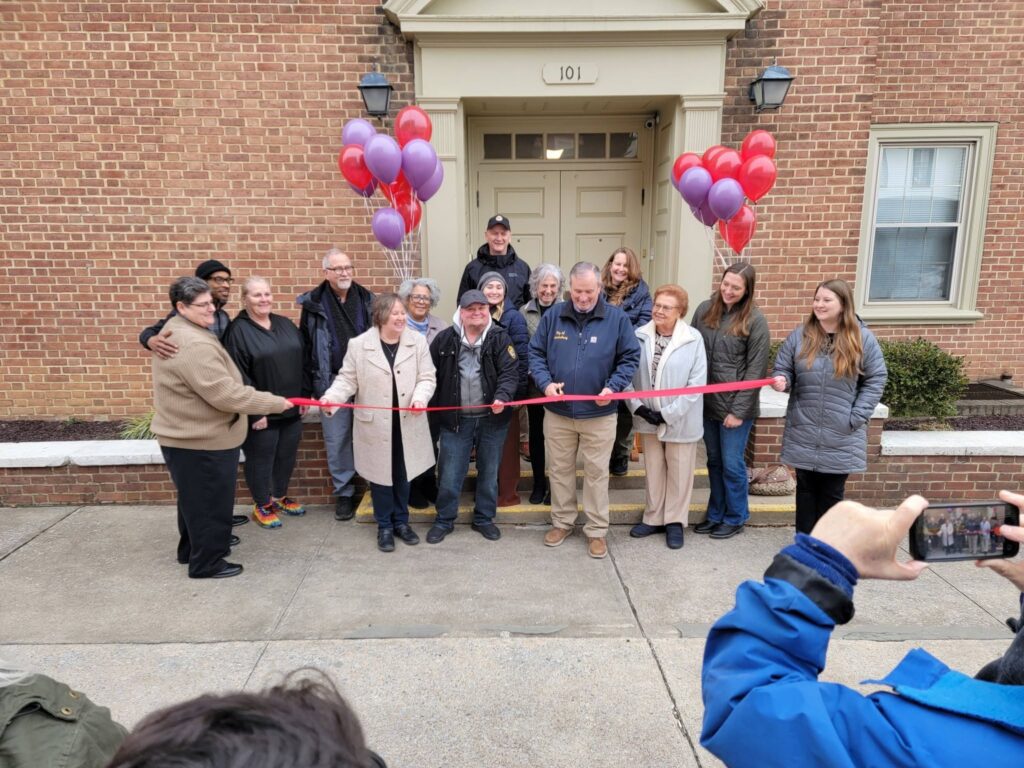
Photo Courtesy Mayor Kevin Knowles Martinsburg WV
Six downtown congregations took turns hosting the Martinsburg Cold Weather Shelter, one week at a time. It opened at Christ Reformed United Church of Christ, which already serves a community dinner every Thursday, then moved through St. John’s, Otterbein United Methodist Church, Destiny Baptist Church, Trinity United Methodist Church and St. Luke’s United Methodist Church. Christ Reformed and St. John’s each hosted more than once. Christ Reformed welcomes visitors with the United Church of Christ conviction that “God is still speaking,” and says its members “remain attentive to God’s creative movement in the world.” From 7 p.m. to 7 a.m., the shelter provided beds for up to 20 adults ages 18 and older. Anyone who stayed a full night was guaranteed a bed for the following night. “Right now we’ve got six churches covering the nine weeks,” Wilson said. “So everything gets in the back of the truck on Saturday and goes to the next place.”
Wilson said that guests did not have to participate in any program to stay the night. “The fact is, even though we do have some housing resources, there are still people sleeping outside,” she said. “So we identified that we needed something that was low-barrier that people could go to when it was cold.” West Virginia had seen deaths from exposure to the cold in recent years, she noted, “and we would definitely not want to see that happen here.” The 2025 Point-in-Time Count found 241 people experiencing homelessness in Berkeley County, more than double the number counted the previous year. After the season, the C.O.R.E. Team’s report concluded, “A low-barrier shelter is essential, as many guests report being unable to access other shelters due to eligibility reasons or personal difficulties.”
The Martinsburg Initiative, which describes itself as “a community effort to break the cycle of substance abuse and build strong families,” took responsibility for the shelter’s staffing, insurance, and liability. “The first thing is that the nonprofit status is through the Martinsburg Initiative, so that once they come into a church, then the church has no liability, because the nonprofit takes over,” Miller explained. The Martinsburg City Council directed opioid settlement funds to the effort, and a grant from the West Virginia First Foundation, which distributes the state’s opioid settlement dollars, covered staffing costs.
By the first Monday after opening, eight people had stayed the night, shelter coordinator Hannah Cooper said. “We’ve had quite a few individuals come in, and we’ve been able to help them in numerous ways, not only just having them stay there overnight, but also connecting them with the appropriate referral services for some needs they have,” she said. Cooper asked for volunteers to help move supplies each week and handle laundry. “So I really want to have that nice range of volunteers so nobody gets overly fatigued trying to work it all by themselves,” she said.
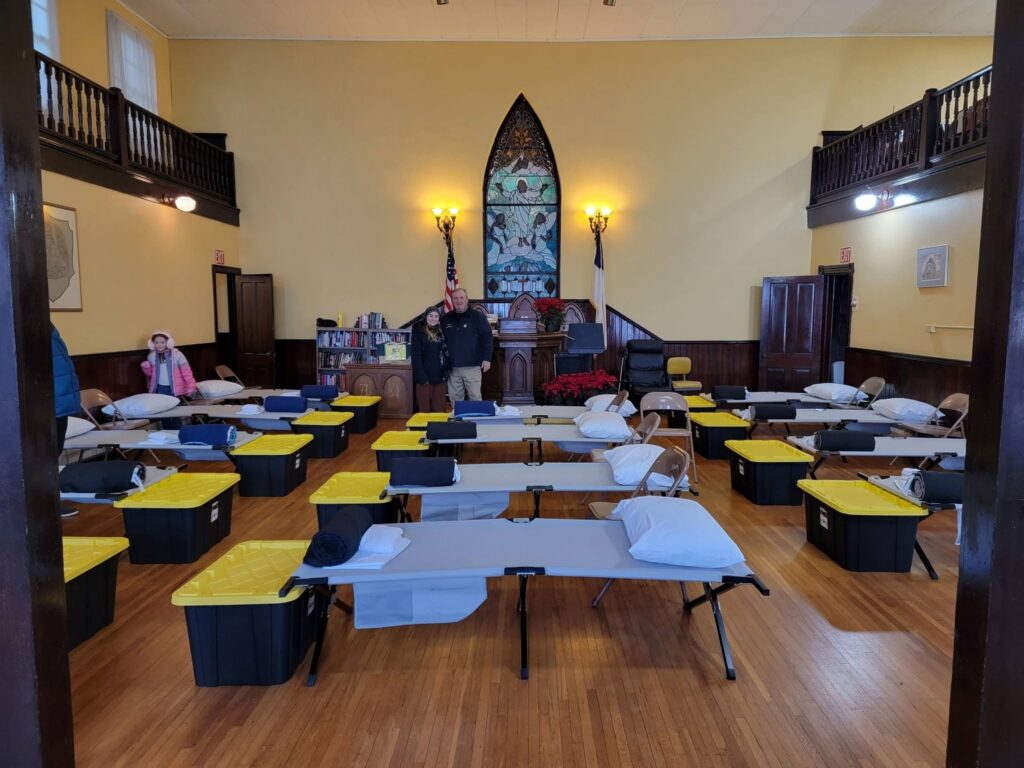
Photo Courtesy Mayor Kevin Knowles Martinsburg WV
The Martinsburg Initiative reports that “what began as a request for a few meals during a snowstorm grew into nightly hot meal donations for nearly the entire shelter season.” The shelter remained open through March 21 and served 62 people over 11 weeks. On the final morning, volunteers from St. Bernadette Catholic Church arrived with tents, sleeping bags and tarps for guests returning to the outdoors.
One staff member reflected on what guests found at the shelter: “We’ve had several individuals tell us, point-blank, that they haven’t eaten a real meal in months. One resident recently shared that they never expected to be treated with such kindness at a shelter — they expected a bed, but they found a community.” Guests gathered around the TV on Super Bowl Sunday, something many unhoused people rarely get to share, and were served special food and drinks for Valentine’s Day.

Photo Courtesy The Martinsburg Initiative
Nannette Redmon of the Martinsburg Initiative helped one guest navigate the process of moving into a home. “I had the pleasure of supporting a working individual at our shelter who was navigating some personal hurdles,” she said. “After helping him navigate the [housing] application and follow-up process, I took him to view the unit. He was officially accepted and moved in shortly after. He was incredibly grateful for the fresh start.” When three other guests found jobs, Redmon made sure they had the essentials for their first day. One young adult who arrived on opening day moved from sleeping outside to steady work and a permanent home within six weeks.
Over the season, staff made 154 referrals; six guests found housing and seven found jobs.
Organizers modeled Martinsburg’s rotation on a shelter in Charles Town, West Virginia, and the Winchester Area Temporary Transitional Shelter (WATTS) in Virginia, which congregations around Winchester run collaboratively. Wilson said she hopes other communities will adopt the same approach. Miller encouraged churches to participate to fulfill Jesus’ command to care for their neighbors. “We need to love our neighbor and support those who are marginalized, and churches need to get back to the basics on that,” she said.
The shelter is scheduled to return Dec. 5 and run through March 13. The Martinsburg Initiative is again hiring a shelter coordinator and managers. The verse at the top of St. John’s homepage carries the same call into a second winter: “Beloved, let us love one another, because love is from God” (1 John 4:7, NRSV).
 Copyright
2026
Root and Vine