
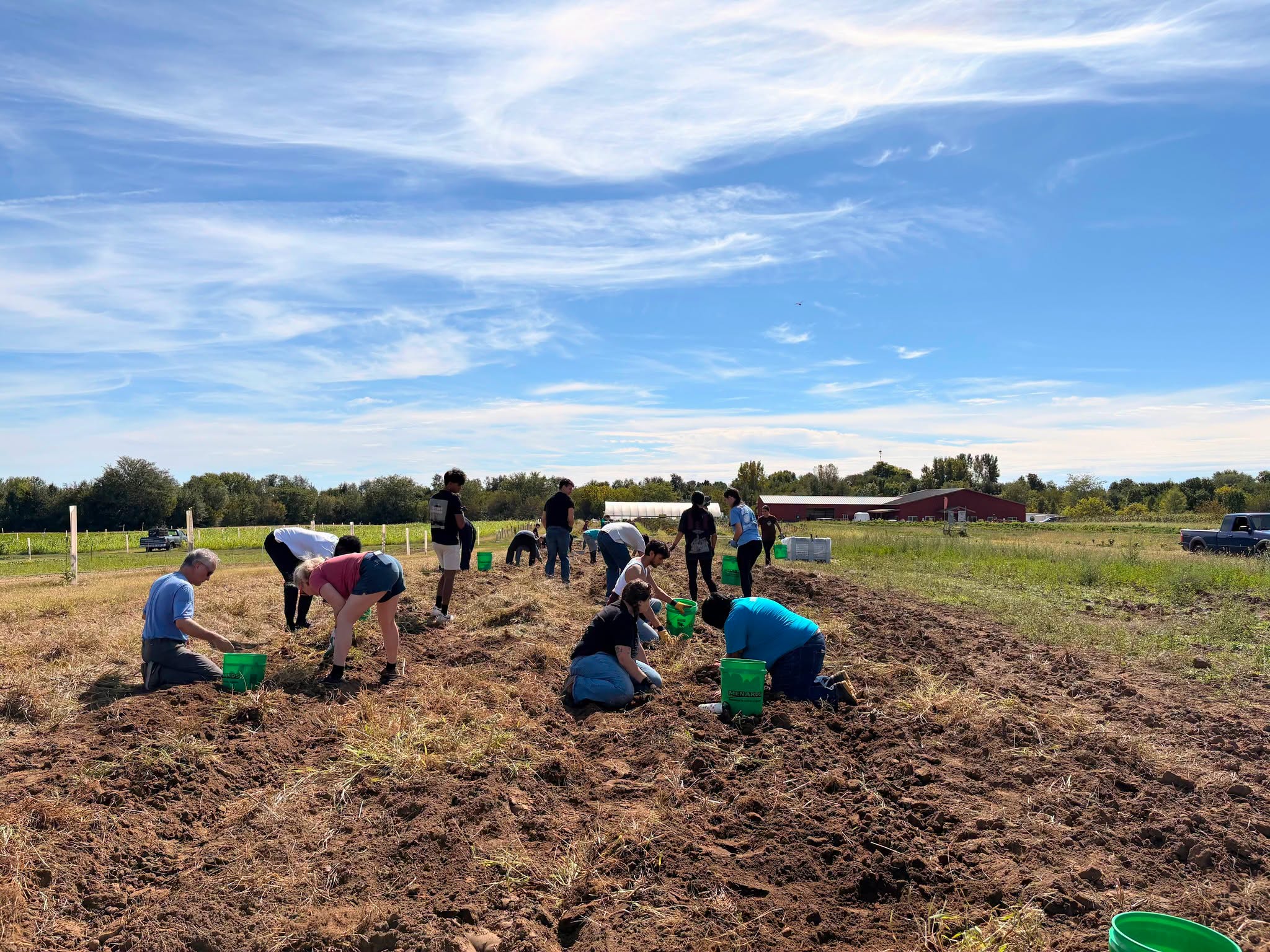
“By grace alone, may we share our gifts with the hungry; may we be good stewards of the earth; may we build a community of cooperation and care.” Faith in Place records those three petitions as the founding vision of Sola Gratia Farm, whose name comes from Martin Luther’s theological adage. “Sola Gratia means ‘by grace alone,’” Fiona Munro, the farm’s Outreach and Education Manager, wrote in a 2022 essay for Public i, adding that the work goes on “until there are no individuals going hungry in our community.”
St. Matthew Lutheran Church founded the farm in 2012 on the far eastern edge of Urbana, Illinois, with a mission “to make healthy food accessible for all by nurturing productive land and cultivating diverse, inclusive communities.” Its partner was Faith in Place, an environmental nonprofit that works with faith communities across Illinois, Indiana, and Wisconsin. Faith in Place counts Sola Gratia among eight Illinois Congregation-Supported Agriculture farms it helped establish, each committed to donating at least 10 percent of its harvest to a food pantry. Pastor Bob Rasmus of St. Matthew called Faith in Place “a competent and creative partner in developing a key ministry.”
For years before that, the church kept four acres of its land in conventional agriculture and gave the profits to an international hunger aid program. In 2011, Rasmus and Brian Sauder, then Faith in Place’s Central Illinois director, began talking about how the church could better care for the Earth, and the church’s own property suggested an answer. The first season arrived in 2012 alongside a historic Central Illinois drought, and church members came together to help plant and build a greenhouse. Traci Barkley, now the farm’s director, looked back on those years with Smile Politely. “It was a bold mission. It took money and a lot of grit,” she said. “It was a lot of sweat equity and heart equity.”
Farm Manager John Williams described the earlier arrangement to WCIA. “They were farming a handful of acres in corn and beans,” he said. “And selling that crop and then taking that money to address food insecurity globally.”
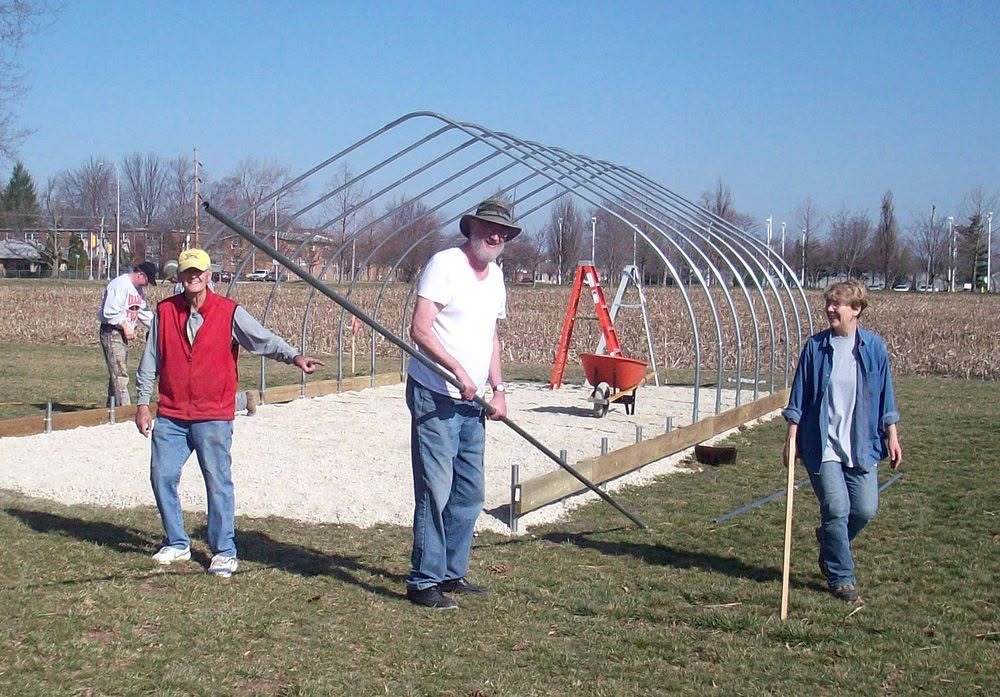
Photo Courtesy Saint Matthew Lutheran Church–Urbana Illinois
The farm calls its giving “Responding to the Gospel.” As a ministry of St. Matthew, it is required to give at least 10 percent of everything it grows to hunger programs. Since 2012, it has grown more than 771,000 pounds of produce and donated more than 180,000 pounds, including 20,404 pounds in 2025. In peak season, deliveries go out weekly to more than seven food pantries and soup kitchens, including Wesley Food Pantry, Faith United Methodist’s food pantry, and three free weekly markets. At local farmers markets, shoppers using the Supplemental Nutrition Assistance Program (SNAP), the Special Supplemental Nutrition Program for Women, Infants, and Children (WIC) or Senior Program benefits can double or triple their buying power for fresh fruits and vegetables.
“We donate about a third of everything we grow into the community,” Barkley told WCIA in 2022. “That’s really the whole point of our farm; to help feed those that have limited food dollars.” She put the conviction more plainly to Smile Politely: “You should get to eat good food regardless of your socioeconomic status. We know there are people struggling literally right across the street.”
Jubilee Café, which operates at Community United Church of Christ, receives a share of the harvest, as do Daily Bread Soup Kitchen and Eastern Illinois Foodbank. “Our neighbors are our greatest assets in doing the work we do,” Munro told the University of Illinois’ We CU program.
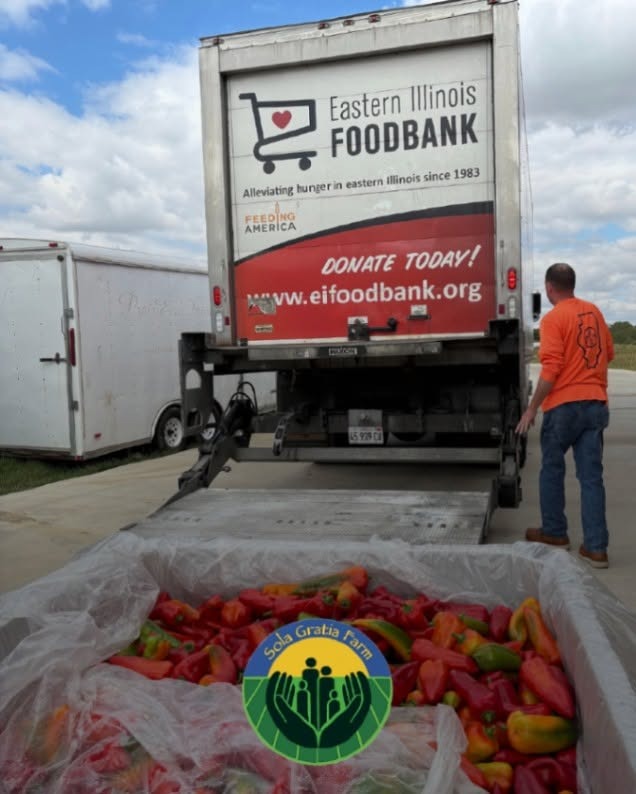
Photo Courtesy Sola Gratia Farm
The same fields fill the weekly boxes of the farm’s Community Supported Agriculture (CSA) members. Members pick up shares at 2200 Philo Road through spring, summer, and fall, drawn from 125 varieties of more than 50 crops grown with organic methods, and those who can afford it may add a “round up” donation to help cover costs for members who need assistance. The CSA began with 80 members and had grown to 200 by 2023, even through a July hailstorm that destroyed about 70 percent of the crops. Williams finds his own encouragement at market: “What keeps me going is when I see a kid at market who’s super excited about that purple kohlrabi.”
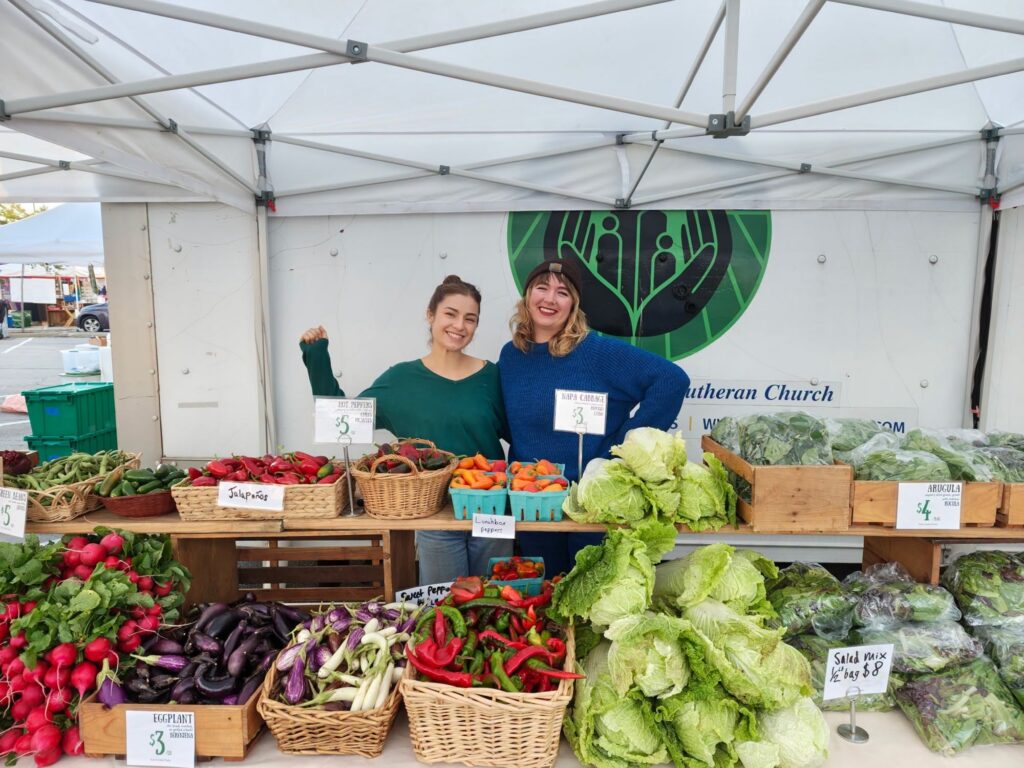
Photo Courtesy Sola Gratia Farm
The farm has grown from four acres to about 29, adding a wash-pack facility and an administrative office building. Explaining why it offers community classes and hosts school groups, Barkley said, “Generationally, we’ve lost a lot, and I feel like there’s an opportunity to get that back.” The original four acres on the church campus serve as an outdoor community classroom for sharing food-growing skills. An Illinois Local Food Infrastructure Grant paid for a refrigerated delivery van and equipment to clean and package produce. “The state invested in us, and that’s shared with others,” Barkley told WVIK.
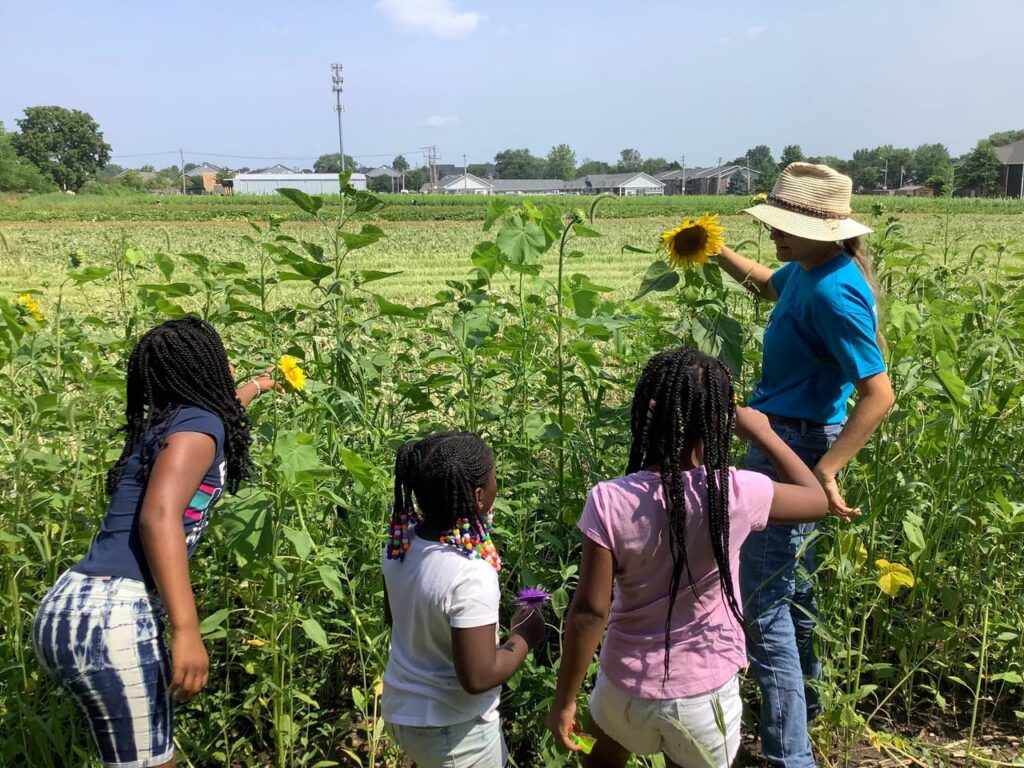
Photo Courtesy Sola Gratia Farm
In its 1993 social statement Caring for Creation: Vision, Hope, and Justice, the Evangelical Lutheran Church in America (ELCA) teaches that people made in the image of God are called to care for the earth as God cares for it. The statement defines sufficiency as meeting the basic needs of all humanity and all creation, including care for farmland so that enough food remains available.
In 2025, the farm planted 472 trees as an “edible windbreak” meant to produce fruits and nuts, shield the crops from airborne pesticides and offer shade. Barkley expects the farm to keep growing, and she credits the generosity around it. “We are so fortunate to live in an intellectually, culturally and spiritually rich community,” she told Prairie Fire.
Supporters sponsored trees in the windbreak in honor of loved ones, some of whom have died, and at the farm’s June 2026 open house they found the tags bearing those names and messages. “It means a lot that you have trusted us with this,” the farm wrote afterward, noting that the trees’ eventual harvests will go to people in need. Barkley told the Savanna Institute the farm aims to improve its soils and “produce food for our community for decades and generations to come.” The trees were planted for harvests still to come, in the same spirit as the farm’s first season: by grace alone, shared with the hungry.
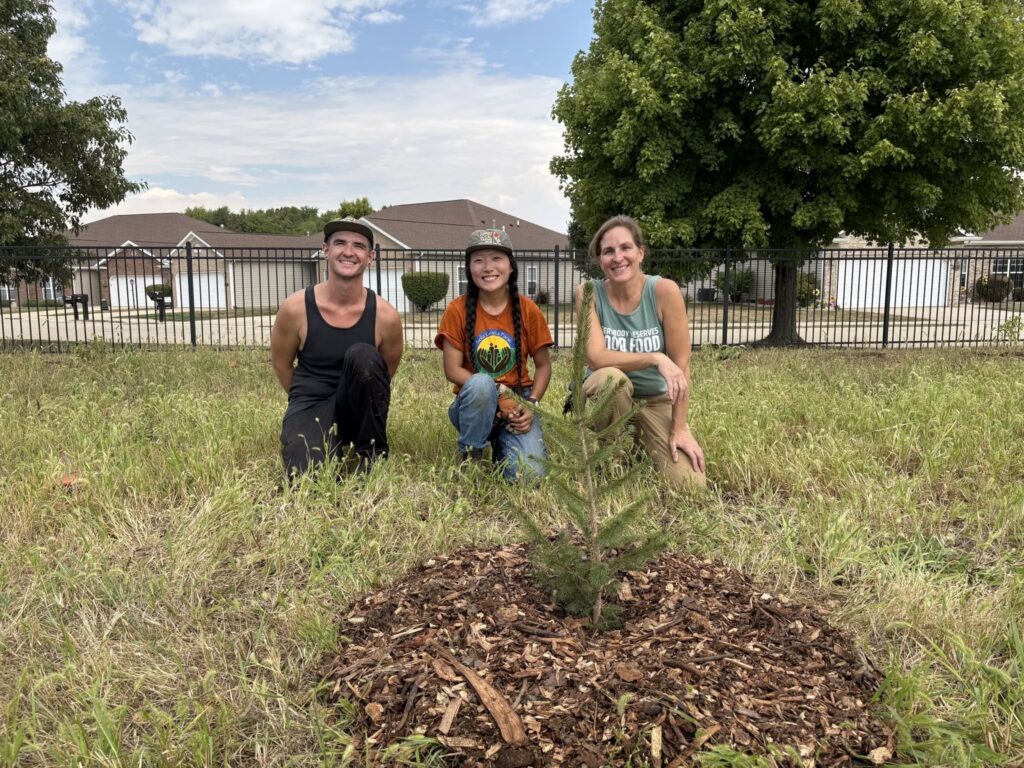
Photo Courtesy Sola Gratia Farm
 Copyright
2026
Root and Vine