
Before modern nations, churches, or power bills ever existed, humanity’s original assignment was simple: take care of a garden. As Genesis 2:15 puts it, “The LORD God took the man and put him in the Garden of Eden to work it and take care of it.” For two congregations along Utah’s Wasatch Front, tending and keeping now includes something their grandparents never imagined: rows of solar panels quietly turning desert sunlight into the means to care for people in need.
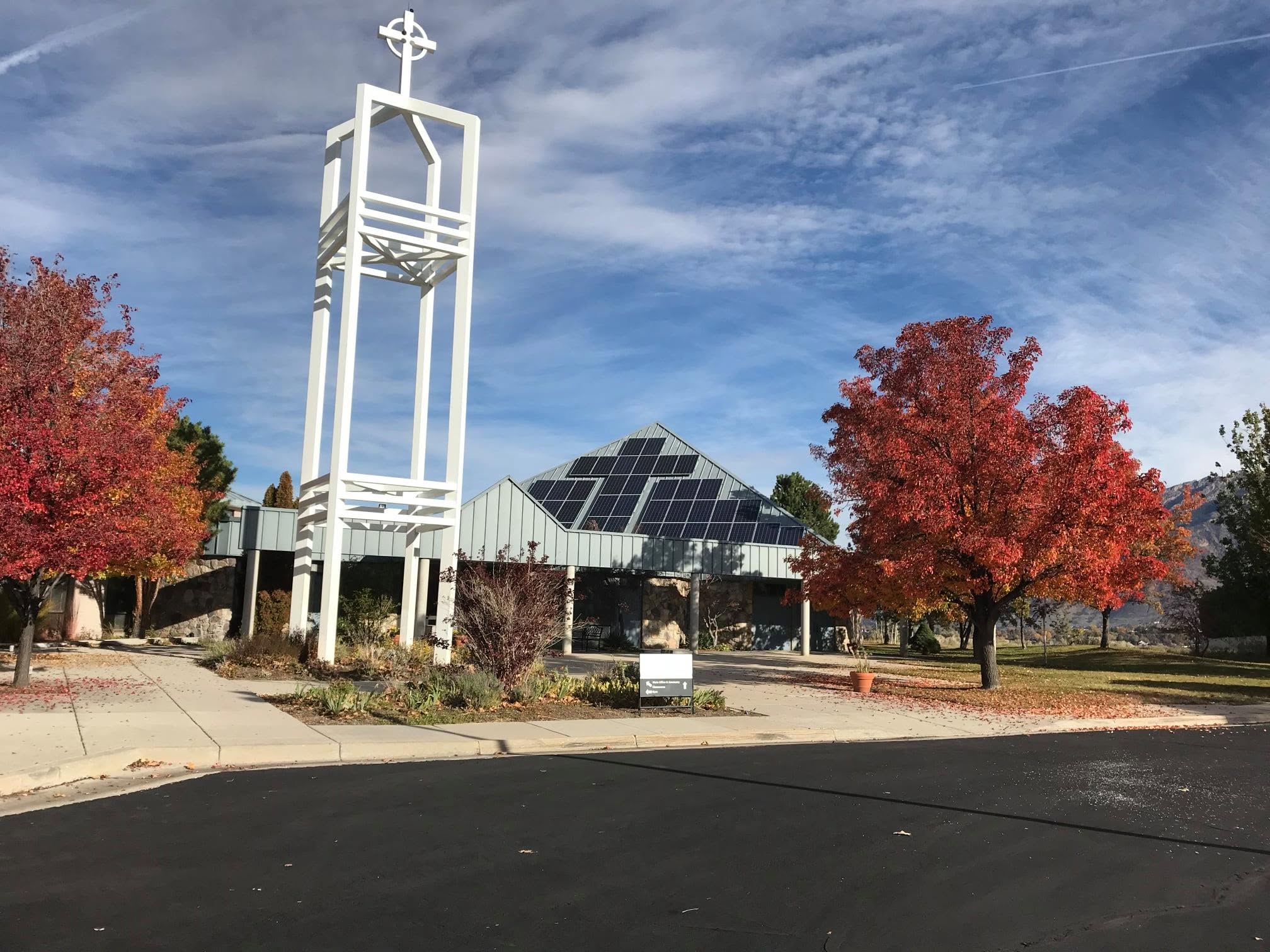
At Community of Grace Presbyterian Church in Sandy, the roof gives the building away. Some of the panels are arranged in the shape of a cross, and Rev. Hansen Wendlandt sees the array as a sermon in glass and silicon, a sign of what this community believes it is called to do: “It becomes a statement to the community. It becomes a statement to your own members that this is what you believe in. This is how [we] believe we’re called to take care of our neighborhood.” The church, with roughly 200 worshipers, now draws about 85% of its power from the sun through 110 panels.
The project did not begin with a grand vision. It began with a leak. Jeff Schreiber, the church treasurer, remembers the practical problem and the deeper conviction that grew alongside it: “We had a roof that was springing leaks, from the snow in the spring. At the same time there was a mounting consensus among the congregation that we wanted to do something to build a future and contribute to sustainable energy production.” A roof that needed fixing became an occasion to ask a bigger question, the kind a congregation can only answer together: what would it look like for this building to reflect what we believe about caring for creation?
The congregation installed the solar panel array in 2018, well before federal incentives for houses of worship existed, with help from a $63,183 grant from Rocky Mountain Power that covered about 70% of the cost. What has come of it since is the part Wendlandt most wants to talk about. The panels have produced almost exactly the energy the installers promised, Rev. Wendlandt explained to Environment America, “which means we have saved money that we can use for other ministries of support for our neighbors in need.” Schreiber expected the savings to cover the cost of the system within two or three years. Savings totaled to $7,000 annually, and, as Rev. Wendlandt told KUER, “Every dollar that we can move away from spending on energy — we can spend it to take care of our community.” In practice, that has meant supporting refugee families and foster children aging out of the system. The sunlight falling on the sanctuary roof is, in a quiet and literal sense, feeding the hungry and welcoming the stranger.
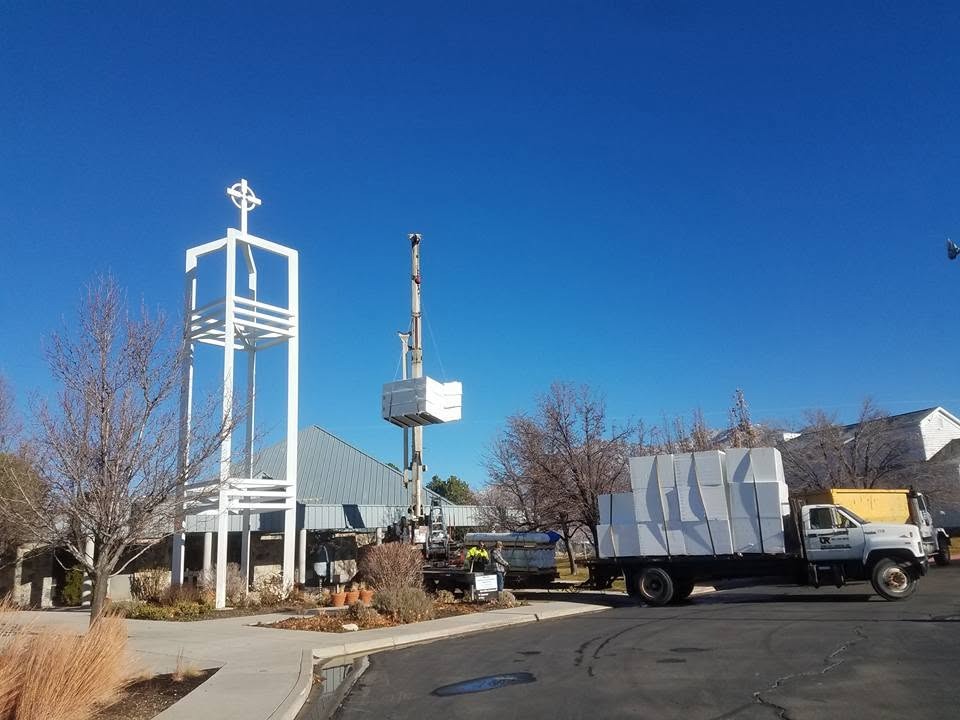
Photo Courtesy Community of Grace Presbyterian Church
Rev. Wendlandt also names the environmental benefits of the solar system: “Consistently through Scripture, we’re called to all kinds of ways of caring for the vulnerable. In this day and age, the environment has created such a hazard for people all around the world.” He added, “Any time we can move people toward realizing the damage that’s being done and realizing the impact they can have for healing the planet — every little step, no matter where those people are on the spectrum, can really make a big difference.”
Schreiber, meanwhile, points to the benefits for the community: “This grant has enabled us to generate renewable energy in a visibly creative way that serves not just our congregation but also many Sandy community groups that make use of our church facility almost daily.”
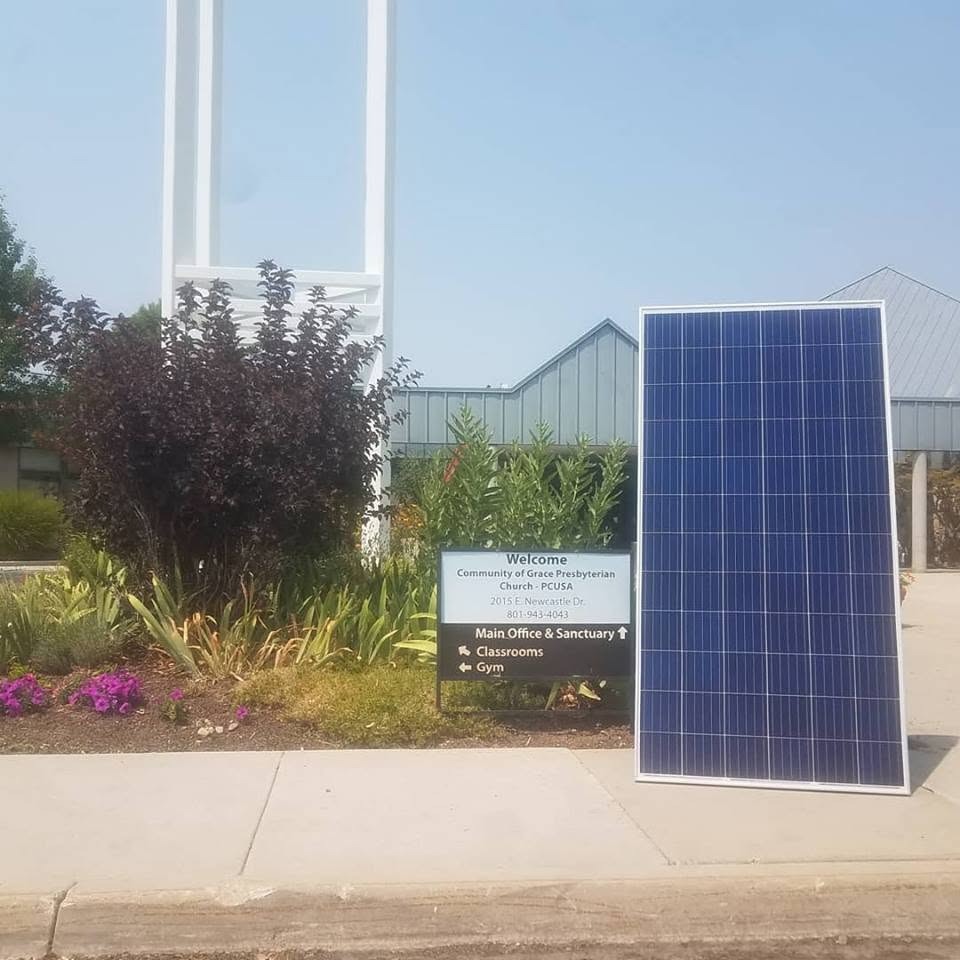
Photo Courtesy Community of Grace Presbyterian Church
Across the valley in West Valley City, a congregation from another tradition reached the same conviction by its own path. St. Stephen’s Episcopal Church is a small parish with about 160 members, and in the summer of 2014, its bishop came out to bless a new set of 76 panels on the church roof. The vicar, Rev. Matt Seddon, did not hesitate to name why. “We really, deeply believe as Episcopalians that we’re called to sustain creation, to be good stewards of the Earth and to renew the face of the Earth,” he told the Deseret News. For Seddon, the solar panels became something close to a second cross on the building. “What these have become is a visible indication that we are actually trying to practice what we preach, and I would say that in many ways it’s just as important as showing the cross, which is a symbol of resurrection,” he said. “In many ways these solar panels are a symbol of resurrection because instead of simply using, we create and we renew and there’s new life, and that’s what resurrection is all about.”
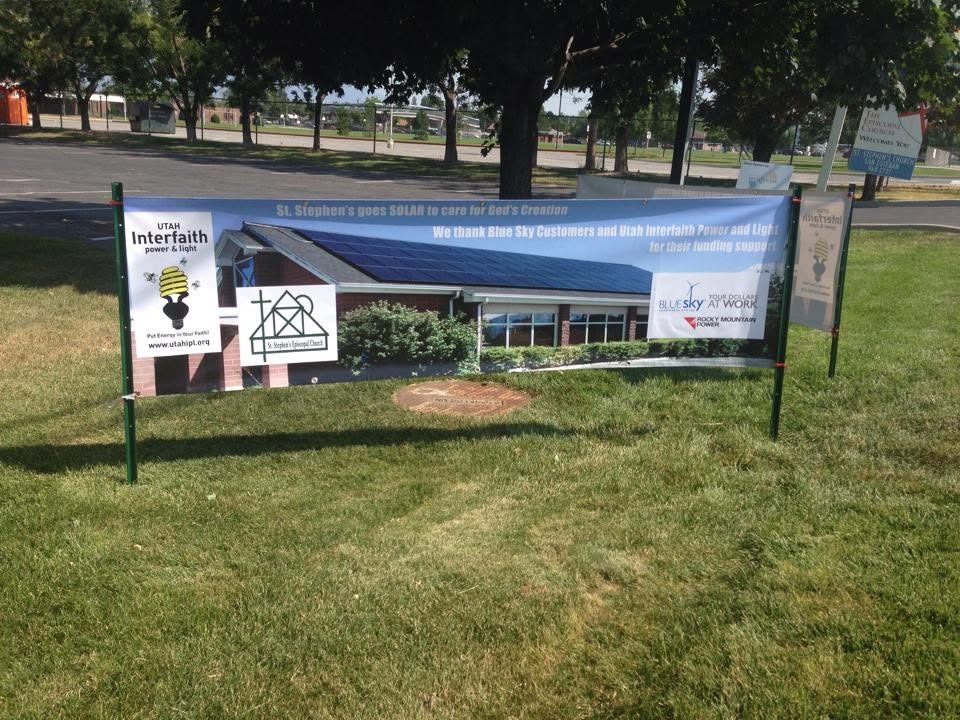
Photo Courtesy St. Stephen’s Episcopal Church, West Valley City, UT
The stewardship reached the budget as well. The panels cut the church’s energy bill roughly in half, a savings the vicar expected to approach $6,000 a year, after the congregation raised $7,500 of its own toward the project, secured a $63,000 grant from the Rocky Mountain Power Blue Sky Foundation, covering 86% of the project’s cost, and received a $2,500 donation from Utah’s Interfaith Power and Light chapter. For Jean Olsen, who has worshiped at St. Stephen’s since 2005, the decision was simple: “We have this huge area of south-facing roof. What better place to put the solar panels?”
Olsen also put the theology more plainly than any position paper could. “If we’re going to be good stewards of God’s creation, part of it means not just taking. We need to be giving back, and I think the solar panels are a way we can sort of give back,” she said. “The energy comes from God. It’s like his grace.”
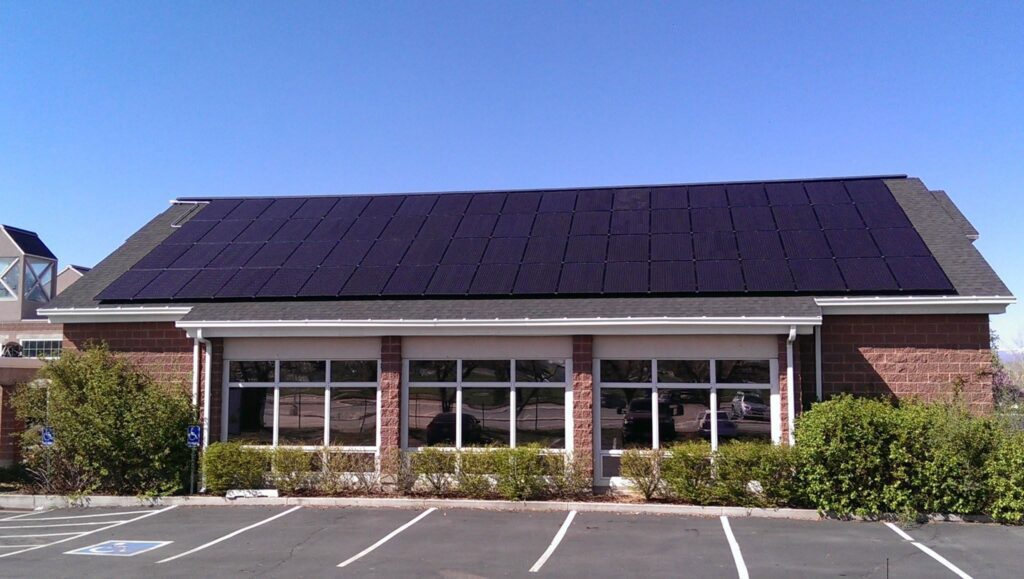
Photo Courtesy St. Stephen’s Episcopal Church, West Valley City, UT
Two congregations of different traditions, a Presbyterian church and an Episcopal one, arriving at the same mindset of stewardship is not a coincidence; It is the ecumenical shape of a calling that runs through the whole body of Christ. The Presbyterian Church (U.S.A.), to which Community of Grace belongs, invites churches into its Earth Care Congregations program and roots the whole effort in the human vocation of “tilling and keeping” the garden from Genesis 2:15. The denomination opens its own case for creation care with a single line of Scripture, Psalm 24:1: “The earth is the Lord’s, and all that is in it.” St. Stephen’s speaks the language of its own liturgy, the call to renew the face of the earth. The words differ; the conviction is one.
The garden was never meant to be hoarded or exhausted. It was given to be worked and kept, and the fruit of that keeping was always meant to be shared. In Sandy and West Valley City, the account comes out the same: less money spent on utilities, more spent on neighbors, and a building that preaches even on the days its doors are closed. Jean Olsen is right that the energy comes as grace. The question each congregation gets to answer is what it will do with what it has been given.

 Copyright
2026
Root and Vine
Copyright
2026
Root and Vine