
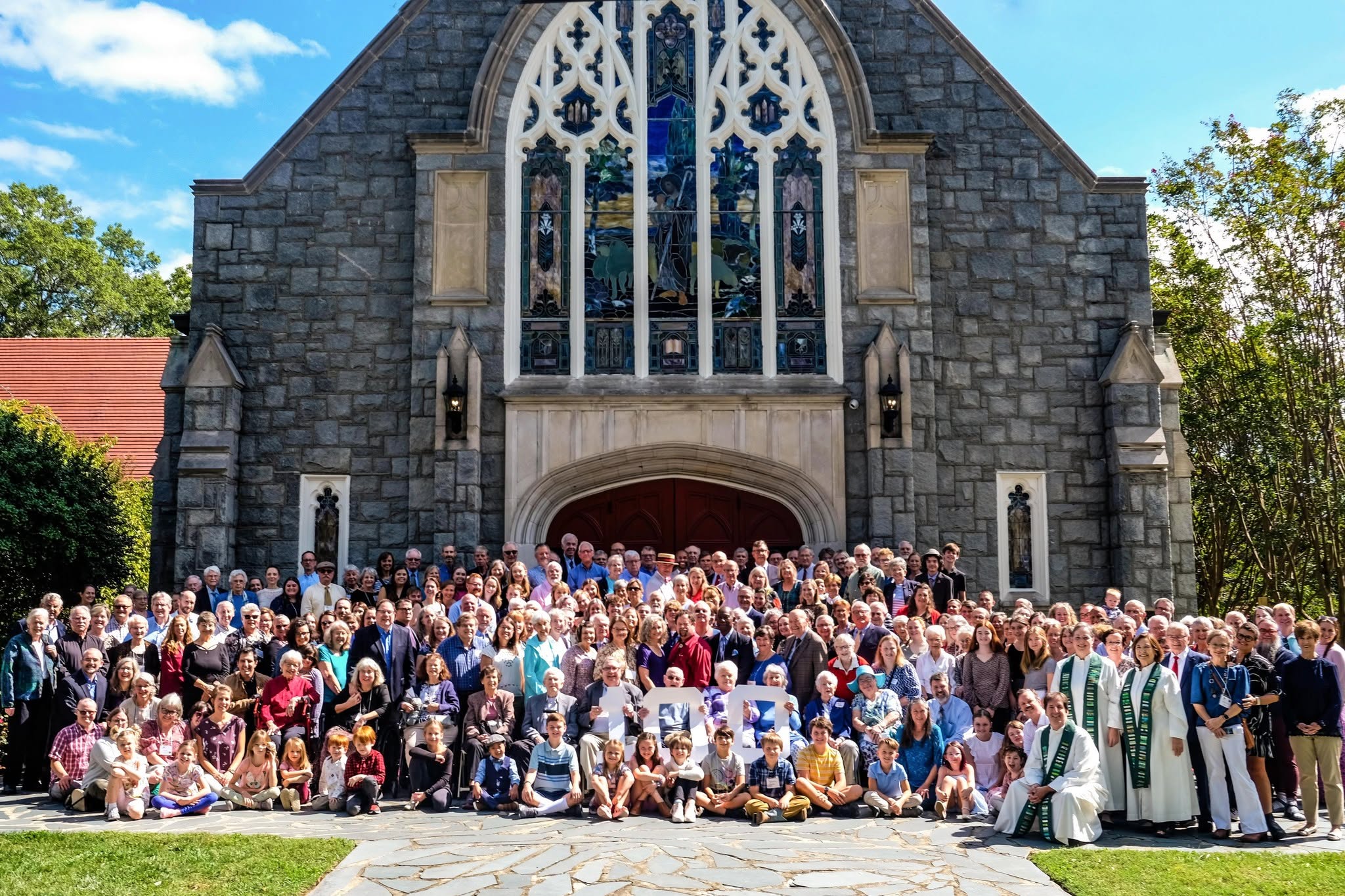
“We enjoy the gift of being surrounded by the beauty, diversity, and power of God’s creation,” the minister said as Watts Street Baptist Church in Durham, North Carolina, gathered its offering on Earth Sunday in 2026. “We are also called to be its faithful stewards and caretakers.”
The service drew its readings from Genesis 1:26–2:4a and Psalm 65, and Norman Wirzba, who serves as Gilbert T. Rowe Distinguished Professor of Christian Theology at Duke Divinity School, preached the sermon titled “Creation’s Hope.” Near the close of worship, the congregation recited its Creation Care Commitment together: “With a Biblical and spiritual foundation and with firm resolve, we recommit ourselves as a community of believers.” The commitment sets 2030 as the year to revisit its goals, and the church credits Binkley Baptist Church in Chapel Hill with inspiring the Proclamation’s language.
The commitment grew out of a Proclamation for Sustainability that the church’s Creation Care Ministry presented to the congregation on Earth Day 2020. The document grounds its work in a deep love for God, the Earth, and all who live on it, and describes the actions it lists as “spiritual practices that bring us nearer to God, the Earth, and all of creation.”
Its first commitment is to cut the landfill waste the church produces, with particular care for the Sampson County residents whose community hosts Durham’s landfill. To get there, the church pledged to eliminate single-use items at church, especially petroleum-based plastics; compost all food waste and biodegradable products used on its premises; and recycle everything it can. The Proclamation also carries a prayer: “We pray for mercy and guidance as we seek to live in greater harmony with God’s creation.”
Photo Courtesy Watts Street Baptist Church
As of 2020, Durham had no landfill of its own, and its trash traveled more than 92 miles by truck to Sampson County. Crystal Dreisbach of Don’t Waste Durham told ABC11 that year, “It concerns me because it’s located in a poorer county.”
Composting at Watts Street began in fall 2019, when the church started collecting the food scraps from every meal served on its premises. In that first year, the church diverted 545 pounds of scraps from the landfill, which it estimates avoided 71 pounds of methane, the equivalent of 1,418 pounds of carbon dioxide, and it says the amount has since held steady. The church also hosts a textile bin for clean shoes, clothing, linens, and other cloth that can no longer be resold, and in 2019 the ministry began phasing out single-use plastics and Styrofoam.
The church planted a pollinator garden on the grounds with plants, materials, and volunteers from the North Carolina Wildlife Federation, and notes, “Pollinator gardens won’t look ‘orderly’ like other gardens—they are created to be free.” In October 2021, the congregation formally adopted the Proclamation, whose further goals reach from stormwater runoff and tree planting to plant-based meals offered alongside meat at church functions.

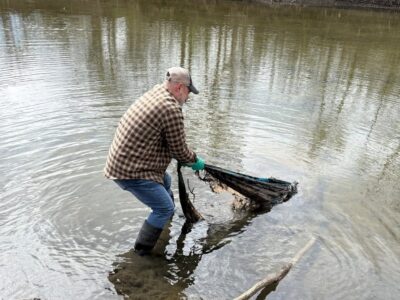
Photo Courtesy Watts Street Baptist Church
The U.S. Department of Agriculture (USDA) estimates that 30 to 40 percent of the nation’s food supply goes to waste; in 2010 alone, the department put the loss at roughly 133 billion pounds of food. The Environmental Protection Agency (EPA) finds that food makes up about 24 percent of the municipal solid waste disposed of in landfills and accounts for an estimated 58 percent of the methane escaping from them.
In 2026, the ministry carried the same practices beyond the church building with a guide titled Reducing Our Impact on God’s Creation: Maximizing Options to Recycle and Decrease Our Landfill Waste. It walks readers through what Durham’s curbside bins accept, points them to drop-off sites such as the Eno River Farmers’ Market for Styrofoam, warns that batteries can start fires when thrown away, and lists the church’s own textile bin as a place to take clean clothing and cloth. The EPA counted 11.3 million tons of textiles sent to landfills in 2018, or 7.7 percent of all municipal solid waste landfilled that year, while only 14.7 percent of textiles were recycled.
A church meal’s leftovers kept off the long road to Sampson County and a worn-out shirt kept out of the trash are small answers to the prayer the congregation wrote into its Proclamation. The church’s homepage carries a line attributed to Mother Teresa that fits them well: “In this life we cannot always do great things, but we can do small things with great love.”

 Copyright
2026
Root and Vine