
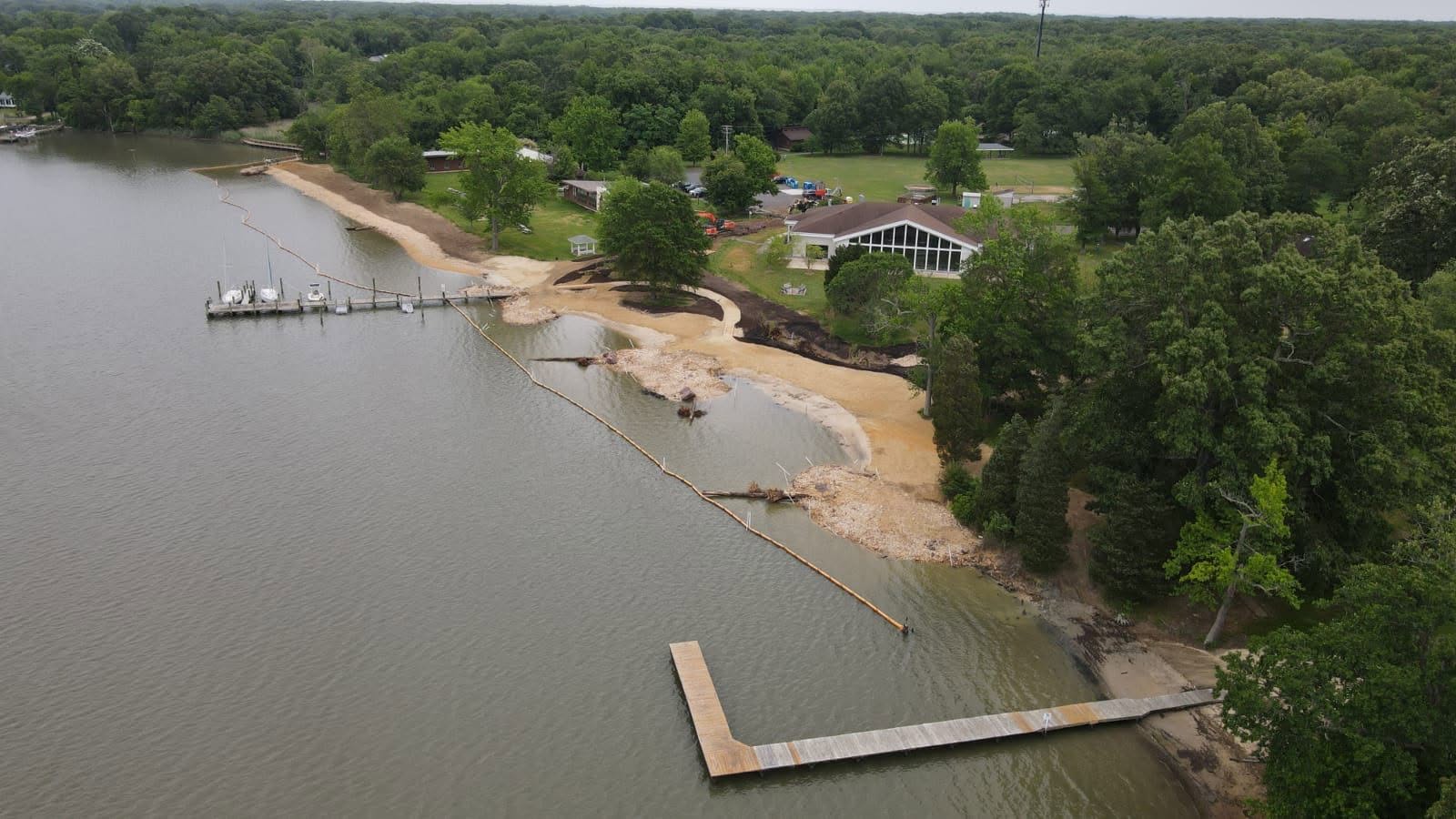
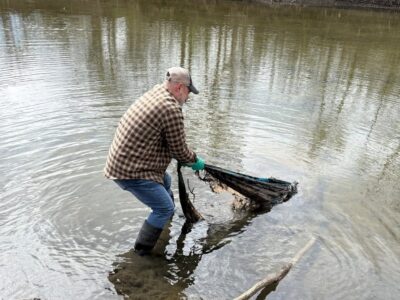
On August 3, 2021, campers at West River United Methodist Center planted hundreds of clumps of marsh grass along the riverside, the final step in building a new shoreline at their Maryland camp. All summer, they had studied “The Water of Life,” a theme that led them from their own baptism to Jesus’ promise of living water and to the gift of water in the world around them. That day, the lesson reached the riverbank.
The West River Center has been owned and operated by The United Methodist Church since 1951. Its mission is “to grow disciples of Jesus Christ through immersion in Christian community and by building relationships in the midst of God’s creation,” and its vision is to “help campers and guests grow in love of God, self, neighbor, and nature.” The camp sits on 45 acres south of Annapolis with a mile of waterfront on the West River, and it welcomes about 10,000 visitors a year. The Baltimore-Washington Conference of The United Methodist Church manages the property.
For decades, a wooden bulkhead stood between the river and the camp, and by 2021 it was failing. “It’s deteriorating because it’s decades old,” said Chris Schlieckert, the Baltimore-Washington Conference’s director of Retreat and Camping Ministries, that spring. Over the years, the river began spilling over the wall and flooding the property, while rainwater collected behind it, and the camp had almost no beach at all. “With a bulkhead, there’s no area for animals to live and have homes,” Schlieckert explained, “because it’s just a wooden wall.”
Work on the wall “was going to need to be done, one way or another,” Schlieckert told a reporter. Dave Coomes, the camp’s maintenance director, met Claudia Donegan, who works on community-based restoration for the Maryland Department of Natural Resources (DNR), and she helped persuade staff to try a gentler, more natural shoreline protection. Schlieckert described “removing the bulkhead and creating a place where people can really access the water” as “phenomenal for our mission and ministry.” “We’re trying to help people connect with nature while they’re here,” he said. “There are a lot of benefits to putting in a living shoreline as opposed to just replacing the bulkhead,” he added, describing it as a better fit for being good stewards of the earth.
Video Courtesy MarylandDNR
Speaking on behalf of Bishop LaTrelle Easterling, the Rev. Tony Love said that “West River has taken on a new ministry of caring for creation as a response to God’s call to stewardship and justice.” He said the project “transforms the waterfront in ways that will bring renewed health and well-being to the riverscape and the Chesapeake Bay.”
The Alliance for the Chesapeake Bay applied for the state grant on the camp’s behalf and managed the project, and contractor Underwood & Associates built it in about two months during the off-season. In June 2021, West River became the first project to break ground under Maryland’s Resiliency through Restoration Initiative, eventually adding 885 feet of living shoreline. The roughly $1.2 million project, about four years in the making, was fully paid for with two grants.
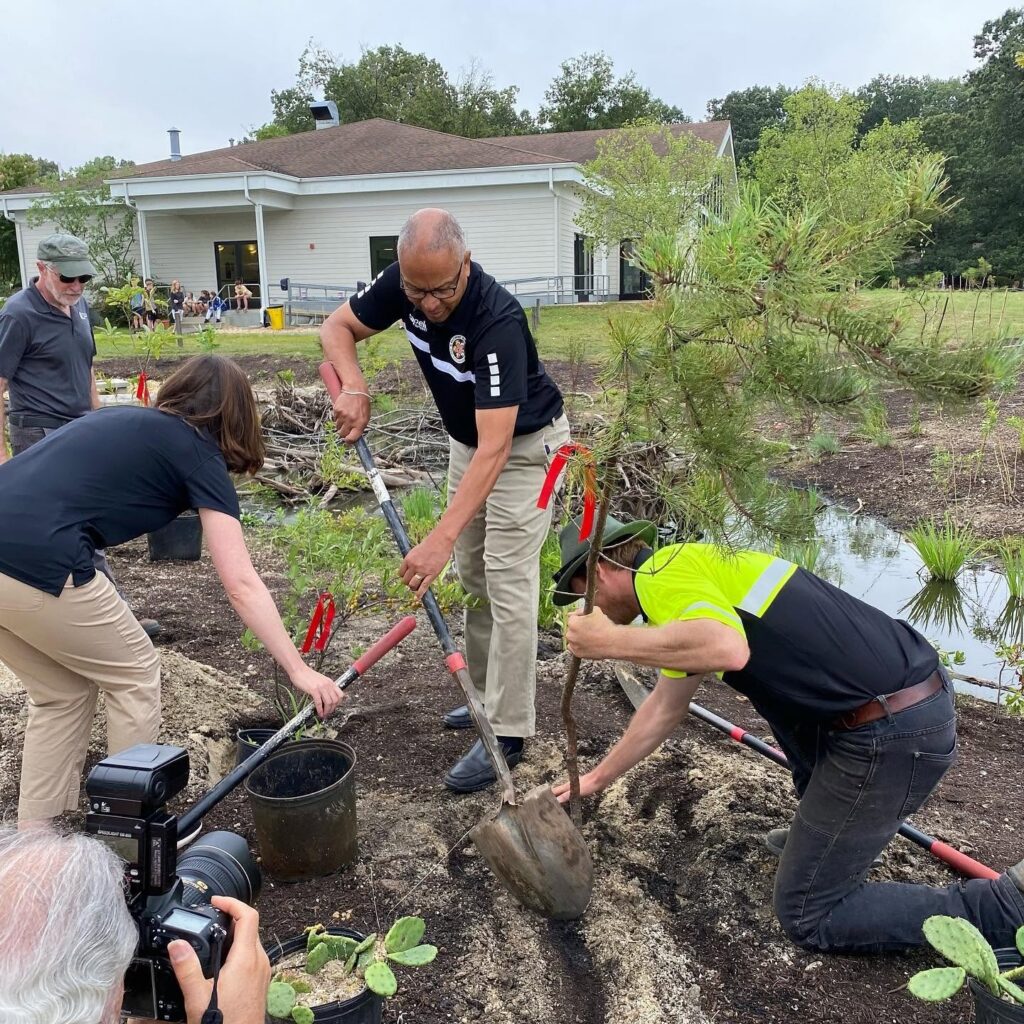
Photo Courtesy Boyd K Rutherford
The finished work replaced 760 linear feet of hardened shoreline with four low-profile stone breakwaters and 130 feet of cobble beach. A regenerative stormwater conveyance system replaced two stormwater pipes, soaking runoff into the ground and creating wetland habitat along the way. Step pools on either side of the dining hall filter parking lot runoff before it reaches the river.
“This project made nearly 1,000 feet of shoreline accessible when it had not been before,” Schlieckert said, adding that he “would absolutely encourage others to do similar projects.” The restored edge has handled the Chesapeake Bay’s high tides well since 2021, and DNR uses the site to show other communities how living shorelines work. At the groundbreaking, Schlieckert noted that the shoreline “provides educational opportunities as a part of our nature center programs with young people” and “helps us be better environmental stewards by providing habitat, improving water quality, and advancing shoreline resiliency.” “It will help people be in touch with nature and with God,” he said before construction began.
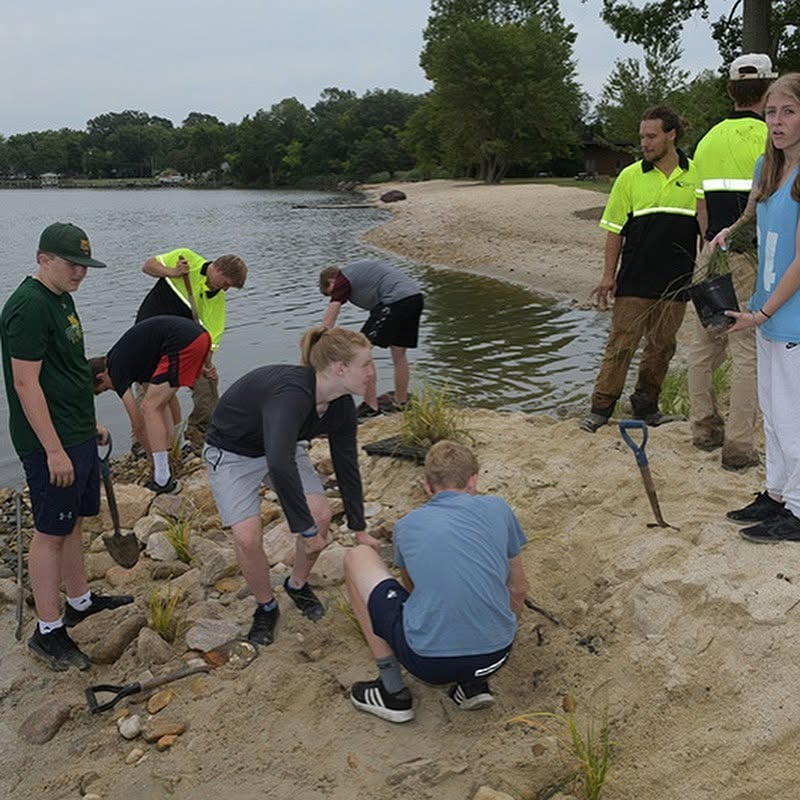
Photo Courtesy Boyd K Rutherford
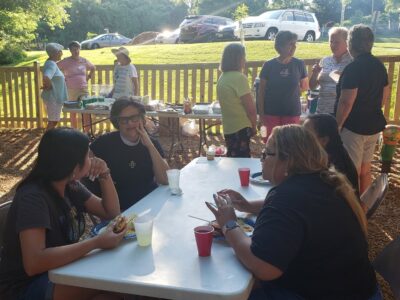
Members of Dumbarton United Methodist Church in Washington, D.C., have come to West River for retreats for more than 50 years. Mittie Quinn, a Dumbarton member, wrote in 2025 that the camp “has become a showplace of ecological care and healthy interaction between humans and nature,” and that the congregation’s Sunday worship there included “a time of silent reflection and roaming around the grounds.”
In 2018, the Alliance restored a stream and shoreline at St. Luke’s Episcopal Church in Annapolis, where stormwater had flooded church property and carried pollution into nearby Back Creek; the work created an environmental literacy campus for the church and its community, with support from the Episcopal Church’s United Thank Offering. The United Methodist Church’s Social Principles root such stewardship in Genesis, where God declares creation good, and teach that “the goodness of God’s creation, and the value given to every part of it, call people to respect, protect” and care for all of it.
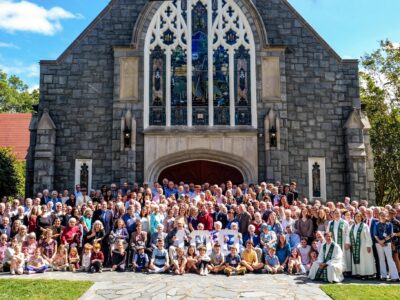
On December 12, the West River Center will gather to celebrate 75 years of building community. Its campers can now walk down to that same water along a shore built to welcome the river rather than wall it out.
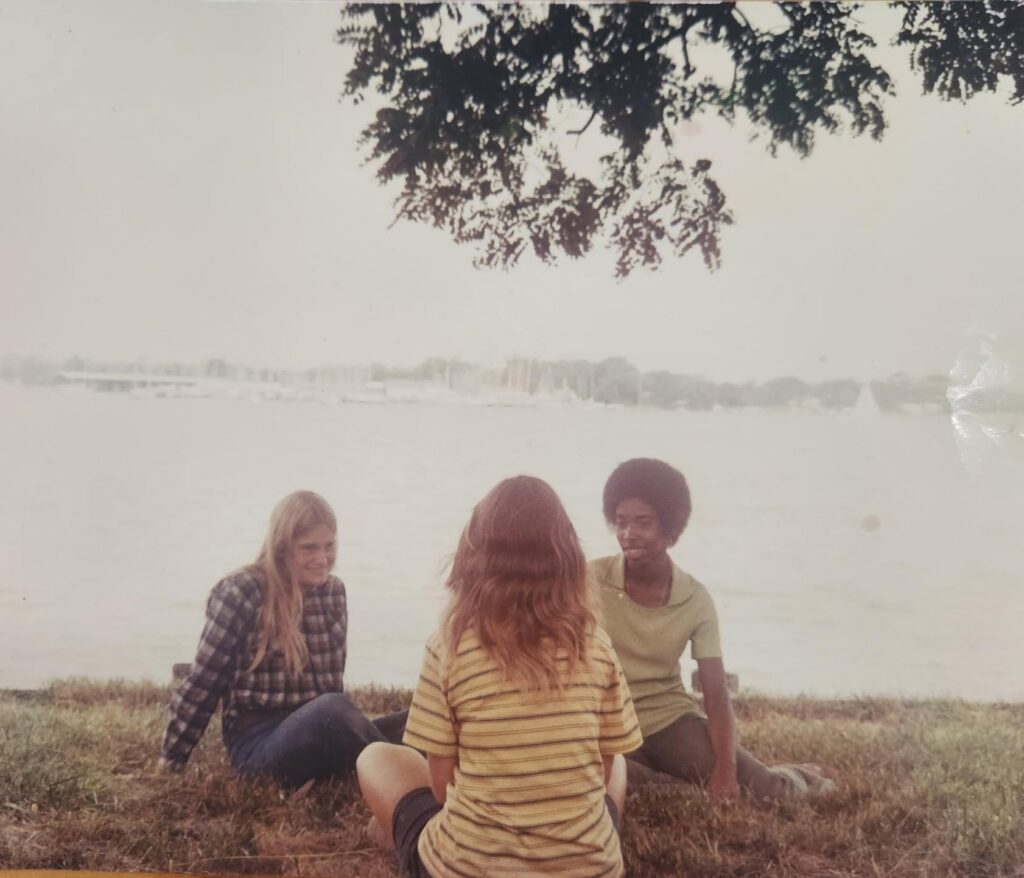
Photo Courtesy West River Center
 Copyright
2026
Root and Vine