
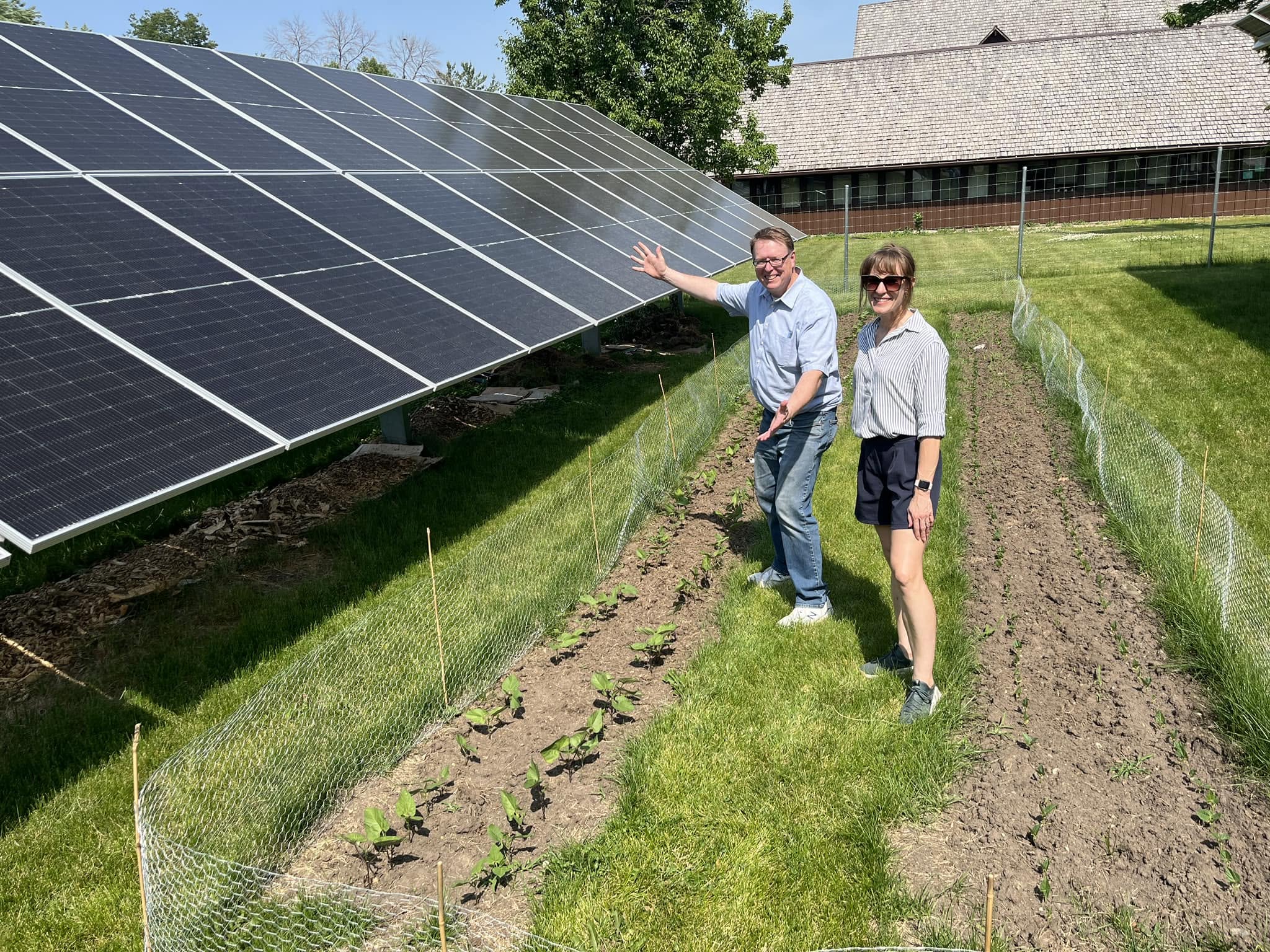
When the solar committee at Christ Episcopal Church in Cedar Rapids, Iowa, opened the mail this past January, the electric bill was the most exciting part of the day. The church reported a bill of $140 for the month, down from roughly $800 two years earlier. “Our bill for that month is $140, which is about as low as we can go because of the various charges for being connected to Alliant’s system,” said Rob Hogg, who chairs the church’s solar power committee. “Two years ago it was $800, or $660 more.” That kind of month-to-month drop is what a small congregation notices first.
Moreover, the numbers were noticeable immediately. The month before the system started generating power, the church’s electrical bill was $779.74. When the panels started operating halfway through the following month, the bill dropped to $284.77. The month afterward, with a full month of operations, it dropped further to $92.96.
For the most recent utility year through March 31, 2026, Hogg said the church had “saved $7,219 from what our bill was three years ago before we did this system,” with typical monthly savings now running between $600 and $900, depending on the season. The money that used to leave the building every month is increasingly staying within the church’s mission.
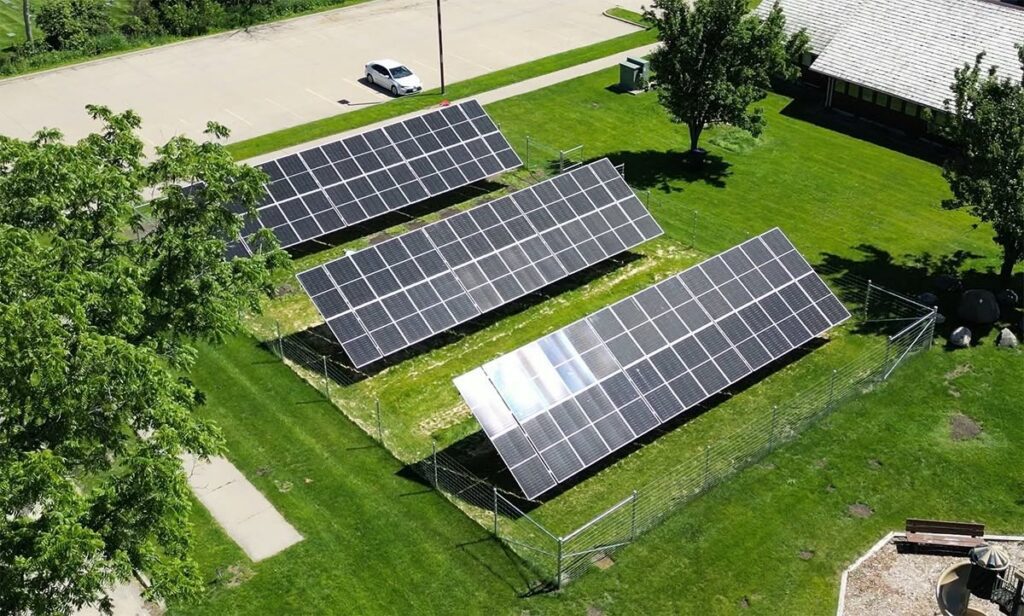
Photo Courtesy Christ Episcopal Church Cedar Rapids
The system behind those numbers is a 45-kilowatt ground-mounted solar array that began operating in the summer of 2024 and is designed to supply close to 100% of the church’s electricity. Iowa’s News Now reported that the roughly $142,000 project was built by Ideal Energy over about three months. The church covered it with reserves, about $30,000 in donations, and a $42,600 federal incentive equal to 30% of the cost. With anticipated electricity bill savings of $10,000 per year and more than $200,000 over the following 25 years, Hogg said at the time, “We expect that this whole thing will be paid for in about seven years, and then we get free electricity after that. That’s a pretty good deal.” There will be no maintenance costs other than replacing or upgrading inverters on a 12- to 15-year basis.
By generating its own power, the church has become self-reliant, reducing its dependence on the local utility, which still uses coal and natural gas. Over its lifetime, the project will eliminate 40 tons of carbon emissions per year, the equivalent produced by 4,000 gallons of gasoline.
The location of the panels adds to their benefits. Because the church is old, the congregation decided on a ground installation rather than a rooftop system. However, the installer built an elevated design and a perimeter fence so the congregation could keep gardening between and beneath the panels for Feed Iowa First, a nonprofit that grows produce for neighbors facing food insecurity.
Moreover, after the church replaces the roof, Hogg wrote, “It would be wise for the church to add more solar power and replace its natural gas furnaces with electric heat pumps. In the future, the church can also consider adding battery storage to become a neighborhood resiliency hub during future disasters.”
For the people who did the work, the panels have become a way to talk about what the church stands for. “We really think it’s an example of faith in action, something tangible that churches can do to show responsible stewardship, both environmentally and financially,” Hogg said.
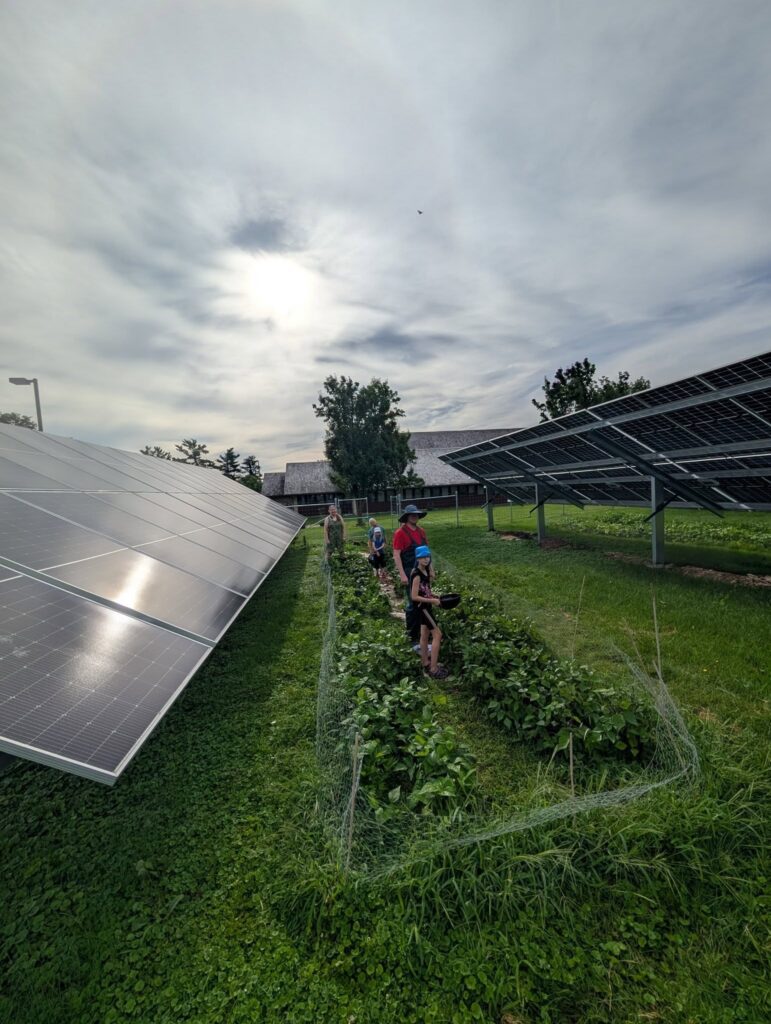
Photo Courtesy Christ Episcopal Church Cedar Rapids
More than 200 miles to the northeast, a Catholic parish in the Mississippi River town of Lansing reached a similar conclusion by a different road. Immaculate Conception Catholic Church installed a 42-kilowatt, 80-panel ground-mounted array on the hillside behind its parking lot, and, according to the Winneshiek Energy District, it offsets more than 90% of the electricity used by the church and its rectory, offices, and classrooms. “It was unused space. It’s south-facing, exactly like you would want it. It would look good on the hillside. It would fit in. It’s the perfect size for our electrical needs, and it would help us to be more energy efficient, and it would save us financially,” Fr. Joseph Sevcik told Resource Rural. “Any savings can help us do our ministry better. It all goes a long way.”
The $110,000 array was built by Northeast Iowa Mechanical of Elgin and financed through low-interest lending from the Archdiocese of Dubuque. Because the parish’s project sits near Alliant Energy‘s recently retired coal-fired Lansing Generating Station, the Winneshiek Energy District reports it qualified for a 10% federal bonus on top of the same 30% federal credit the Cedar Rapids church used. Although the credits are no longer available, the project saves the church about $9,000 per year and will save more than $250,000 in energy bills over its lifetime, so “it was a no-brainer,” according to Sevcik.
For Father Joseph Sevcik, the case was rooted in something older than the tax code. “As Christians, we strive to be good stewards of our resources,” he said. “The Vatican has been installing solar systems over the past year. After reviewing our energy audit and solar assessment from Paul and Jim, it was clear to our Pastoral Council that this solar project would be a great benefit in multiple ways.” He added in conversation with Resource Rural, “This is a way to be sustainable with our energy, and it’s going to be long-lasting to help us out. Further, we should care for creation to the best degree reasonably possible.”
Both churches arrive at the same practical result: a fixed cost turns into a shrinking one, and the difference is redirected toward food pantries, ministry, and the day-to-day work of keeping a congregation going. The panels are quiet. What they free up is not. As Sevcik reflected, “I love it when the sun shines. I just think about how much electricity we’re generating.”
 Copyright
2026
Root and Vine
Copyright
2026
Root and Vine